Buyer answer: choose a glass material only after you define the contents, temperature cycle, shape, closure, decoration, destination market and test plan. Soda-lime and borosilicate are material families, not finished-product guarantees. A strong specification connects the named material and forming route to the performance the finished bottle, jar or decanter must demonstrate.
| Decision | Soda-lime may fit when | Borosilicate may fit when | What the buyer should verify |
|---|---|---|---|
| Temperature exposure | The use is near ambient conditions and the finished product passes the defined thermal cycle. | Lower thermal expansion supports the intended temperature cycle and the finished geometry is validated. | Named grade, temperature range, rate of change, wall distribution, annealing and finished-sample test. |
| Shape and forming | A conventional container process and established neck finish suit the design and order model. | Hand forming, tubing or a specialty route suits the geometry, internal detail or production model. | Forming route, access, tooling, wall distribution, critical dimensions, yield and sample plan. |
| Food or beverage contact | The finished product, decoration and closure have the required destination-market evidence. | The finished product, decoration and closure have the required destination-market evidence. | Applicable declaration or report for the exact product and intended conditions—not a material-family claim. |
| Commercial fit | Current quotations, tooling, packing and volume assumptions support the program. | The specialty process and project terms support the design and buyer's demand evidence. | Comparable quotations based on the same drawing, QC plan, packaging and order scenario. |
Start with the use condition, not the material name
“Borosilicate or soda-lime?” is usually asked too early. First define what the container will hold, how it will be filled, washed, transported and used. A bottle for ambient spirits, a jar exposed to a hot-fill process and a component assembled into another product create different decisions even if the visible shape looks similar.
Write the real use conditions into the brief:
- contents, concentration, pH or other relevant contact conditions;
- minimum and maximum temperatures, including the starting temperatures of the glass and contents;
- rate and frequency of temperature change;
- filling, capping, washing, sterilization or consumer-use steps;
- expected service life and handling environment;
- destination market and required product documentation.
A material label alone does not justify “oven safe,” “freezer to boiling,” “unbreakable,” “food safe” or similar claims. Those statements require a defined finished product, conditions of use and supporting evidence.
What the thermal difference means—and what it does not prove
Borosilicate grades are often considered when lower thermal expansion is valuable. As named examples, SCHOTT reports a mean coefficient of linear thermal expansion of 3.25 × 10⁻⁶ K−1 from 20–300 °C for BOROFLOAT® 33 and 9.1 × 10⁻⁶ K−1 over the same range for its AR-GLAS® soda-lime technical glass, both using ISO 7991. These figures illustrate two documented products; they are not universal values for every borosilicate or soda-lime formulation.
Lower expansion can reduce stress created by a temperature gradient, but a finished container also depends on wall-thickness variation, geometry, annealing, residual stress, scratches, attachments and the test setup. A laboratory property is an input to the decision, not a substitute for representative product testing.
Food-contact and chemical questions belong to the finished product
Glass composition matters, but the finished article may also include colorants, printing, decals, coatings, adhesives, lids, liners, gaskets or silicone parts. The U.S. FDA explains that the status of a food-contact material depends on its components, specifications, limitations and intended conditions of use. Other markets apply their own rules and documentation requirements.
Ask for evidence that matches the exact product and market. A useful request identifies the glass or grade, decoration, closure system, test method, sample identity and report scope. Do not treat an unrelated certificate, a supplier's general statement or the word “borosilicate” as proof for every design.
Bottle shape can override an otherwise sensible material choice
A bottle shape controls more than shelf appearance. It affects forming access, wall distribution, balance, filling, pouring, closure fit, packing density and breakage exposure. A long projection, narrow internal passage or heavy off-center feature may create a manufacturing or transport risk that material selection alone cannot solve.
| Shape feature | Buyer question | Decision evidence |
|---|---|---|
| Neck and opening | Which closure, filling head or seal must fit? | Controlled neck-finish drawing, closure sample, fit and leak checks. |
| Base and center of gravity | Will the filled product stand, pour and display safely? | Filled-sample stability, tilt and handling checks under the intended configuration. |
| Internal glass detail | Can the feature be formed, cleaned, inspected and protected? | Feasibility review, approved visual standard, dimensional priorities and packing test. |
| Projections and narrow sections | Where will stress, impact or packing contact concentrate? | Geometry revision, wall-distribution review and representative transport testing. |
| Decoration area | Is the surface accessible and stable enough for the selected process? | Artwork placement, process sample, adhesion or durability check and appearance limit. |
Match the forming route to the design
“Glass bottle” can describe products made through different routes. A conventional container line, hand-blown borosilicate process, lampworked component or mixed process will not share the same geometry limits, tooling, tolerances or commercial model. Ask the supplier to name the proposed forming route and explain why it fits the drawing.
For a custom hand-blown borosilicate project, Ingcho reviews geometry, forming access, critical dimensions, wall and base requirements, internal details, closures and packaging before confirming a route. Complex features may need to be simplified, split into components or checked with a different gauge, jig or mold plan. Feasibility should be decided before a fixed price or schedule is treated as reliable.
Write a specification that a sample can answer
A useful specification separates critical requirements from preferences. If every dimension is marked equally, the supplier cannot see which features control function and which can accommodate normal hand-made variation.
- Identify the drawing revision. Record units, overall dimensions, target capacity and the orientation used for measurement.
- Mark critical interfaces. Call out the neck, sealing surface, thread, gasket, closure, sleeve and assembly dimensions that control fit.
- Define appearance. Describe color, clarity target, wall or base effect, seams, bubbles, surface marks, logo and decoration placement using an approved reference where possible.
- Name the material evidence. State the required grade or property basis, destination market, contact conditions and documents or tests needed.
- Define functional checks. Capacity, leak, pour, stability, closure torque, thermal cycle, chemical contact or other tests should have a stated method and pass condition.
- Define packaging checks. Inner protection, dividers, carton, pallet pattern and transport-test expectations should match the real sales channel.
Use representative products to discuss risk
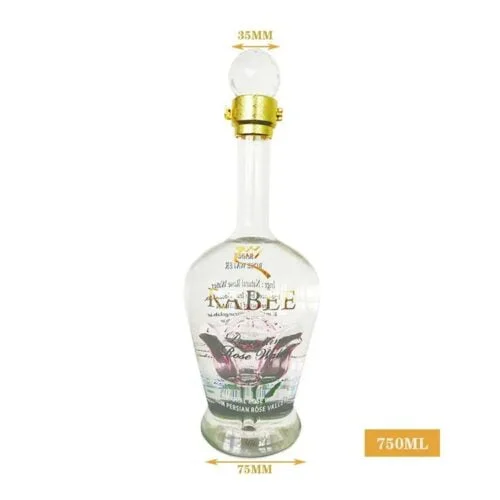
Existing products are most useful as manufacturing references, not as designs to copy. An interior rose bottle can prompt discussion about internal detail and visibility. A ship-shaped bottle can prompt discussion about projections, balance and packaging. A handcrafted borosilicate liquor bottle can prompt discussion about wall distribution, base effect, decoration and retail presentation.
Those examples do not establish the feasibility, material, compliance or commercial terms of a new design. The new drawing and project conditions remain the decision source.
A practical material-selection sequence
- Define the contents, temperature, handling, destination market and claims the product must support.
- Freeze the functional geometry: capacity, neck, closure, critical dimensions and use orientation.
- Compare feasible material and forming routes against the same drawing and test plan.
- Review tooling, sample route, expected variation, packaging and commercial assumptions.
- Approve a representative sample against recorded acceptance criteria before production.
For a deeper technical comparison, read Borosilicate vs. Soda-Lime Glass: Which Material Fits the Use?. For tooling decisions, continue to the buyer's guide to glass bottle molds and samples.
Frequently asked questions
Is borosilicate always better than soda-lime glass?
No. “Better” depends on the use condition, named grade, geometry, forming route, test plan, compliance evidence and commercial model. Compare finished-product evidence against the same specification.
Can I identify borosilicate by clarity, weight or edge color?
Visual clues are not a reliable material identification method. Use supplier documentation tied to the product and, when necessary, an appropriate test method.
Does borosilicate mean a bottle is food safe?
No material-family name establishes finished-product compliance. The glass, colors, decoration, closure and intended conditions must be covered by the evidence required for the target market.
Should the material be chosen before the shape?
Develop them together. Geometry changes forming access, wall distribution, stress, closure fit, packing and cost. A route that works for a simple cylinder may not work for a complex internal or projected feature.
What should I send for an initial review?
Send a drawing or reference with capacity, overall dimensions, critical interfaces, intended use, quantity scenario, destination, closure, decoration and packaging requirements. Mark what cannot change.
Technical references
- SCHOTT: BOROFLOAT® 33 technical details — named borosilicate-grade data, used here as a bounded example.
- SCHOTT: AR-GLAS® technical details — named soda-lime technical-glass data, not a universal container-glass value.
- U.S. FDA: Determining the regulatory status of components of a food-contact material — explains why status depends on components, specifications, limitations and intended use.
No. An ordinary Mason jar should not be assumed to be borosilicate glass. “Mason” identifies a threaded jar and closure format, not a glass composition. Conventional container glass is commonly soda-lime. Borosilicate Mason-style jars also exist, but the manufacturer must identify the material for the exact product.
If the product page, drawing or test document does not name borosilicate glass, do not infer it from the jar’s shape, clarity, thickness, brand or household use.
Mason describes the jar and closure format
Mason-type jars usually have a threaded neck and a closure made for preserving food. Regular-mouth and wide-mouth versions come in several capacities. None of those features identifies the glass family.
| Term | What it identifies | What it does not prove |
|---|---|---|
| Mason jar or Mason-style jar | Jar and closure format | Glass composition, thermal-shock limit or process approval |
| Soda-lime container glass | A common glass family for bottles and jars | Suitability for a hot-fill or canning process without the finished-package specification |
| Borosilicate glass | A glass family with lower thermal expansion than soda-lime glass | Approval of the lid, liner, decoration or finished jar for hot fill, pressure canning or retort |
| Canning jar | The maker intends the jar for stated preserving uses | Permission to use any recipe, pressure, temperature or closure |
Why a canning jar does not have to be borosilicate
A home-canning jar works as part of a jar-and-lid system. Its performance depends on the container design, closure, preparation, temperature and processing instructions. The National Center for Home Food Preservation recommends regular-mouth and wide-mouth Mason-type jars with self-sealing lids. It also warns that sudden temperature differences can break a jar.
“Used for canning” and “made of borosilicate” therefore describe different facts. A soda-lime jar made for a defined canning use can be suitable when the jar maker’s instructions and a tested recipe are followed. A borosilicate storage jar is not automatically a canning jar.
Hot fill, home canning and retort use different process conditions
The FDA separates room-temperature fill, refrigerated or frozen storage, hot fill or pasteurization, boiling-water sterilization and higher-temperature heat sterilization into different conditions of use. A packaging brief should identify the actual condition rather than use “heat-resistant” as a substitute.
- Hot fill: product temperature, jar starting temperature, fill temperature, hold time, headspace, closure application and cooling profile.
- Home canning: a jar and closure intended for that use, plus a tested recipe and process for the food and altitude.
- Commercial retort: process pressure, heat penetration, equipment and validation for the exact food and package.
Changing the jar size, shape, closure, food consistency or process changes heat transfer and sealing behavior. A Mason silhouette or a borosilicate label cannot replace process validation.
How to verify the glass and intended use
- Read the material field. Look for a named glass family. “Premium,” “heat-resistant” and “food-grade” do not identify the composition.
- Match the drawing to the product. Ask for the material specification, exact SKU and document revision.
- State the process. Give the food, fill temperature, jar starting temperature, hold time, cooling method, storage and cleaning method.
- Specify the closure. Record the lid, liner, gasket, neck finish, application torque, vacuum requirement and leak test.
- Check the evidence. Food-contact and performance documents must match the materials, finished components, test method and destination market.
When to specify a borosilicate Mason-style jar
A borosilicate Mason-style jar fits projects that require lower thermal expansion, high visual clarity or a lightweight hand-blown form. The finished design still needs acceptable wall distribution, closure fit, handling, decoration, packaging and thermal-process checks.
Browse the borosilicate glass jar category for available shapes and closures. The glass jar size guide lists the capacity, mouth and pack-out information needed for comparison.
Information needed for a custom jar brief
Start with the contents, nominal and brimful capacity, mouth and closure, critical sealing dimensions, filling process, storage, decoration, quantity, destination and packaging. Then identify the preferred glass and the evidence required by your technical or compliance team.
Send Drawing for Review for a custom borosilicate Mason-style jar or food container. Ingcho confirms feasibility, tolerances, tooling, MOQ, sample route, timing and documentation after reviewing the drawing and process.
Frequently asked questions
Are Ball-style or regular canning jars borosilicate?
Do not assume so. “Mason” and “canning jar” identify the format or intended use, not the glass composition. Check the manufacturer’s specification for the exact product.
Does thicker glass mean a jar is borosilicate?
No. Wall thickness and material composition are different properties. Weight, color and clarity do not identify the glass family either.
Can every borosilicate jar take boiling liquid?
No. Check the finished jar specification, condition, starting temperature, temperature difference, closure and manufacturer’s instructions for the exact use.
Can every borosilicate Mason-style jar be pressure canned?
No. Pressure canning requires a jar and closure intended for that process, plus a tested procedure for the food. The material name is not process approval.
What should a B2B buyer ask a jar supplier?
Ask for the material specification, drawing revision, nominal and brimful capacity, dimensional tolerances, neck finish, closure and liner, intended conditions of use, test evidence, sample approval criteria and packaging plan.
Sources for the material and process distinction
- Glass Packaging Institute: What Is Glass. Identifies soda-lime glass as the standard glass-container composition.
- National Center for Home Food Preservation: Recommended Jars and Lids. Describes recommended Mason-type home-canning jars and closure use.
- National Center for Home Food Preservation: General Canning FAQs. Explains jar breakage risks, including sudden temperature differences.
- FDA: Food Types and Conditions of Use for Food Contact Substances. Separates hot fill, boiling-water sterilization, high-temperature sterilization and other conditions of use.
Key Takeaways: Making Special Glass Jars
- Strong Glass: We use a special glass called borosilicate. It does not break easily with heat.
- Handmade Art: Skilled people use fire to shape glass tubes into jars. This is called lampworking.
- Your Own Design: Jars can be many colors, shapes, and have cool things inside.
- Important Lids: Lids keep things fresh and make jars look good.
- Cooling Down: Jars cool slowly in an oven to be strong. This is annealing.
- Good for Earth: Glass can be recycled. We try to waste less.
- Checked for Quality: Every jar is checked to make sure it is perfect.
The Magic of Making Unique Glass Jars at Ingcho.com
Glass jars can be more than just simple holders. Some glass jars are like pieces of art. They are made in special ways to look beautiful and different. At Ingcho.com, we know how to make these unique glass jars. It starts with an idea. Then, skilled people use their hands and tools to turn plain glass into something amazing. These jars can hold your favorite foods, fancy creams, or even pretty candles. Making them takes time and care. Each jar tells a story of careful work. This makes the things inside them feel even more special.
Why Borosilicate Glass is Special for Your Jars, Like This
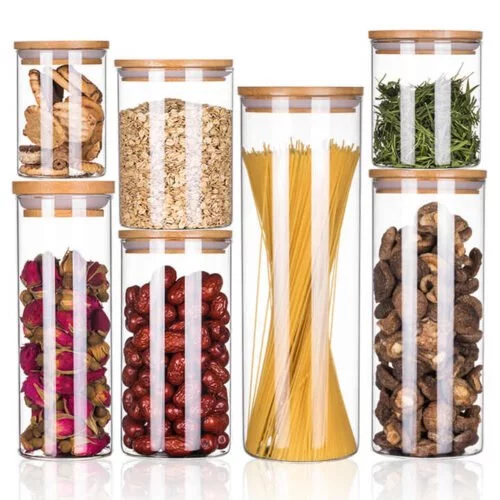
Not all glass is the same. For our special jars, like this Borosilicale Glass Jar with Bamboo Lid, we often use borosilicate glass. This glass is super strong! It can handle hot things and cold things without cracking. Think about pouring hot soup into a jar – borosilicate glass can take it. It’s also very clear, so you can see what’s inside perfectly. This glass does not let tiny bits of itself mix with your food or creams. This keeps everything pure. You can learn what you need to know about borosilicate glass bottles and why it's a top choice.
The Art of Lampworking: How We Shape Your Custom Glass Jars
Making unique jars often uses a cool method called lampworking. Imagine an artist using a very hot torch, like a small, powerful flame. They take a tube of borosilicate glass and heat it with this torch. When the glass gets soft and melty, they can shape it. They might blow air into it to make it round. They use tools to form the base, the walls, and the neck of the jar. It takes very steady hands and a lot of practice. This is how we create custom glass jars with all sorts of interesting shapes. The hand-blown borosilicate glassware process shows this skill.
Making Jars Pretty: Colors, Textures, and Cool Shapes like the
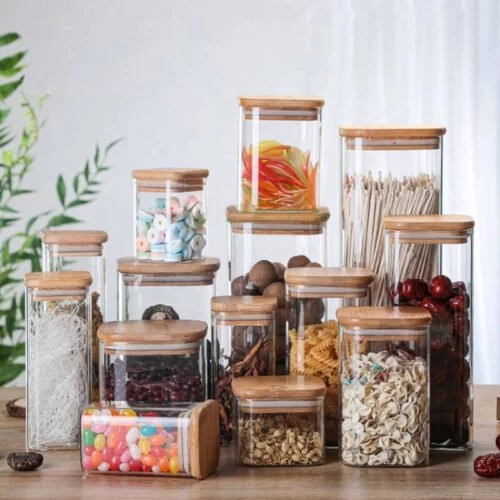
A unique jar is not just about its shape. We can make glass jars in many colors. Artists can use colored glass rods or add special powders to make the glass blue, green, or amber. They can also give the jar a texture. This means the surface might feel bumpy, smooth, or have patterns. Look at this Glass Square Jar with Lid – its shape is part of its charm. Sometimes, tiny glass animals or flowers are even put inside the jar walls! You can even try DIY glass painting on jars to add your own touch to simpler jars.
More Than Just a Jar: Lids for Your
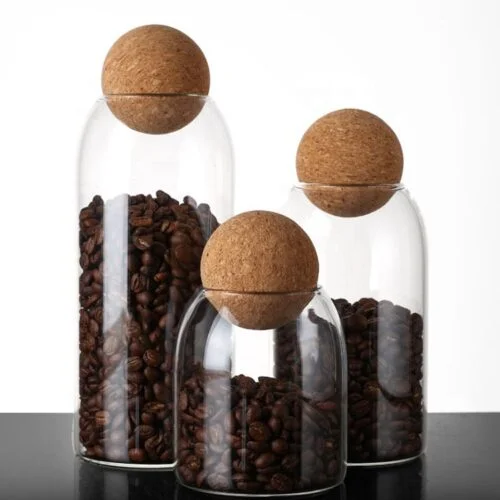
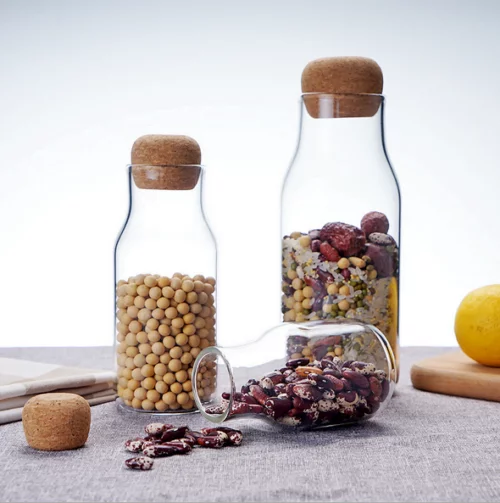
The top of the jar, called the closure, is very important. It could be a lid that screws on, a cork stopper, or a fancy glass top. These closures keep the air out and the stuff inside fresh. Think about a Coffee Bean Glass Jar; its lid keeps the beans yummy. Or a Glass Jar with Natural Cork Stopper Lid which gives a nice, natural look. The right lid makes the jar work better and look complete. There are many types of glass jars and each can have a special lid.
Keeping Jars Strong: The Cool-Down Secret (Annealing) for
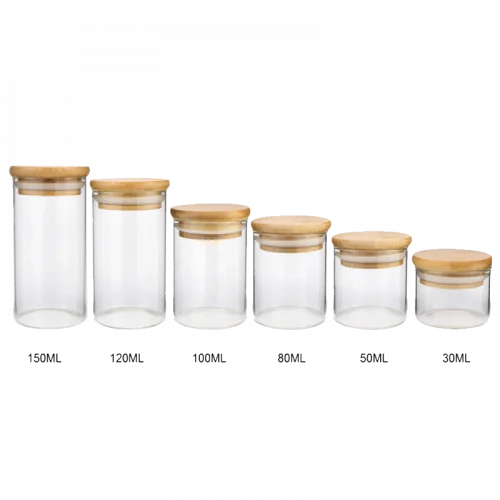
After a glass jar is shaped with fire, it cannot just cool down quickly. If it does, it might get weak spots and break easily. So, we use a special oven for a process called annealing. The jars go into this oven while still hot. Then, the oven cools down very, very slowly. This helps the glass relax and get rid of any stress inside it. It makes the jar super strong and durable, like these Glass Jars with Lids. Proper annealing is key for quality, especially in borosilicate glass application and development.
Caring for Our World: Making
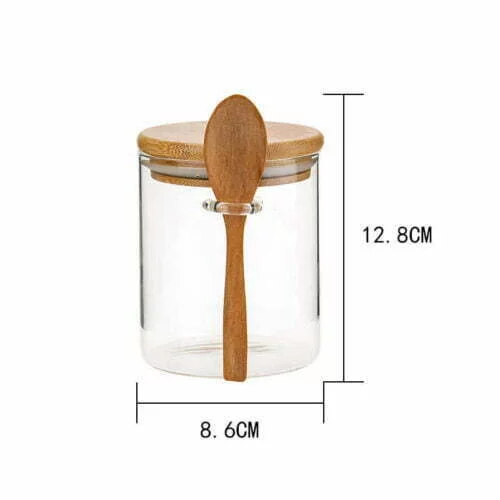
Making beautiful things like this Glass Jar With Bamboo Spoon should also be kind to our planet. Glass itself is a good material because it can be recycled many times. When we make jars, we try not to waste glass. Small leftover pieces can sometimes be melted and used again for new things. Good borosilicate glass manufacturers think about saving energy too. Using borosilicate glass also means the jars last a long time, so you don't need to replace them often. This is good for everyone.
How Ingcho.com Makes Sure Your Unique Glass Jars Are Perfect
When we make unique glass jars, we want each one to be just right. This means we check them very carefully. This is called quality control. We look for any tiny cracks or bubbles that shouldn't be there. We make sure the jar is the right size and shape. If it has a lid, we check that it fits well. For custom glassware manufacturing, this is super important. At Ingcho.com, our team has years of experience. We know that even a small detail can make a big difference in how much you love your special glass jar.
Frequently Asked Questions (FAQs)
Q1: What makes borosilicate glass good for jars?
A1: Borosilicate glass is strong. It doesn't break easily if it gets hot or cold quickly. It's also clear and doesn't change the taste of food.Q2: Can I get custom shapes for my glass jars?
A2: Yes! Using lampworking, artists can make many different and unique shapes for jars. Ingcho.com specializes in custom designs.Q3: Are these unique glass jars strong?
A3: Yes, especially if they are made from borosilicate glass and annealed properly. Annealing is a slow cooling process that makes glass very strong.Q4: How are colors added to glass jars?
A4: Colors can be added by using glass that is already colored, or by adding special colored glass powders (frit) when the jar is being made.Q5: Are these glass jars good for the Earth?
A5: Glass is a good choice because it can be recycled. Borosilicate jars are also very durable, so they last a long time.Q6: What kind of lids can I get for my glass jars with lids?
A6: There are many kinds! You can get bamboo lids, cork stoppers, glass lids, or metal lids, depending on the jar and what you need.
Here are the key things to know about market trends in globe decanters:
- Pretty and Popular: Globe decanters are liked for their world map look and are often given as gifts.
- Growing Market: More people are buying decanters, especially glass ones from online shops.
- Cool Designs: People enjoy unique globe decanters with features like tiny ships inside.
- Strong Glass: Borosilicate glass is a great material because it's tough and safe for drinks.
- Home Style: Making homes look nice and giving thoughtful presents makes globe decanters more wanted.
- Quality Matters: Good craftsmanship and interesting designs help sell decanters.
- Future Wants: Buyers are looking for decanters that are kind to the Earth and can be made special for them.
- Many Choices: Ingcho.com offers a variety of these interesting glass items.
The Allure of the Glass Globe Decanter: More Than Just a Bottle
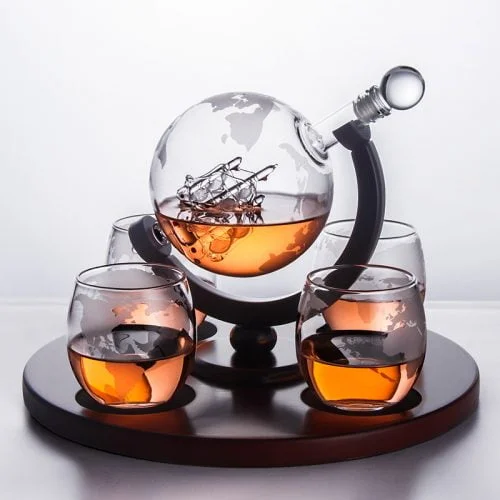
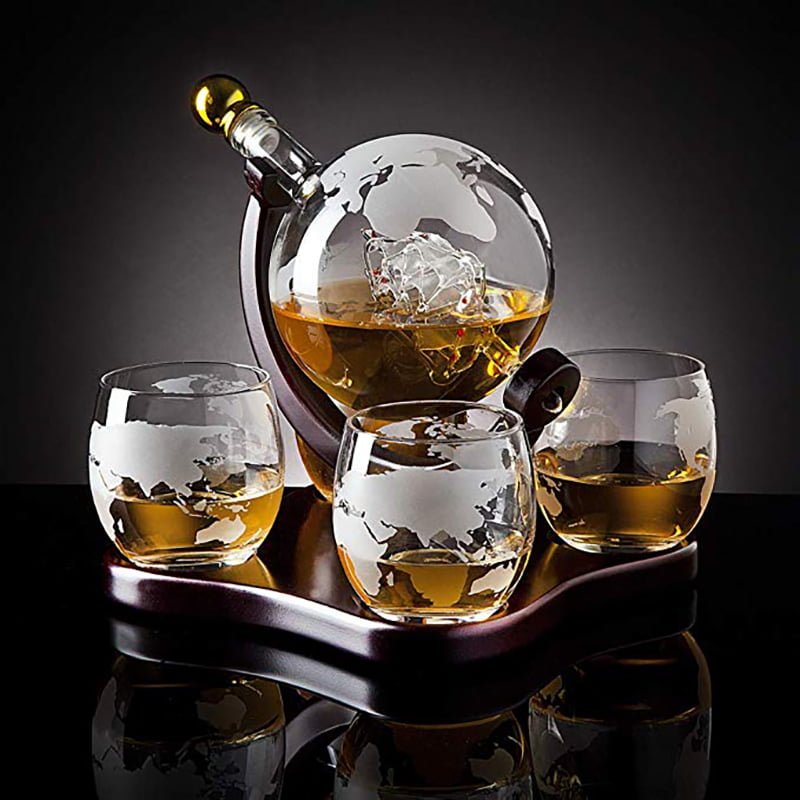
Globe decanters are special. They often show a map of the world etched on the glass. Many times, a tiny, detailed glass ship sits inside. This makes them much more than a simple container for drinks. They become a beautiful piece of art for your home or office. I've seen these decanters instantly catch a guest's eye. They are great for starting conversations. People also love giving them as gifts for important days like Father's Day or weddings. Their design is a key reason people choose them, as they often look for unique and self-developed products to display.
A Growing World: The Market for Globe Decanter Sets
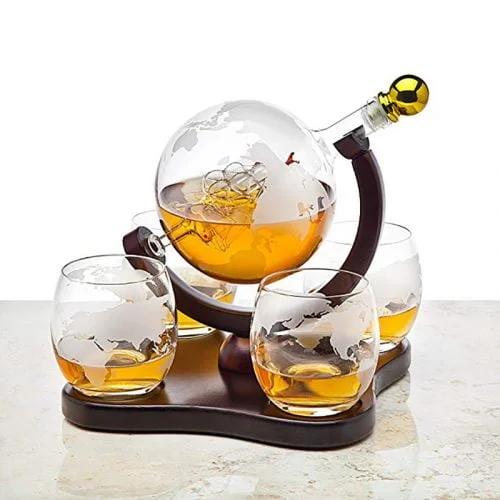
The number of people buying decanters is going up. This is especially true for decanters used for spirits like whiskey and wine. Glass is the favorite material for these items. It looks good and feels high quality. More and more, people buy from online stores. This is because it is easy and there are many choices. A big reason for this growth is that home bars are very popular now. People enjoy making a nice space at home to relax and have drinks. This trend helps the entire glass decanter category grow, including these lovely globe-shaped ones.
Inside the Globe: Features of a Globe Whiskey Decanter
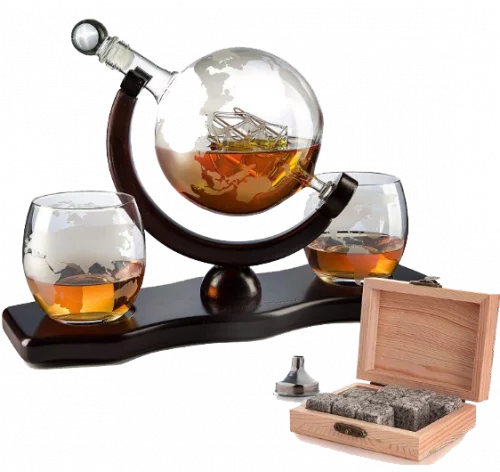
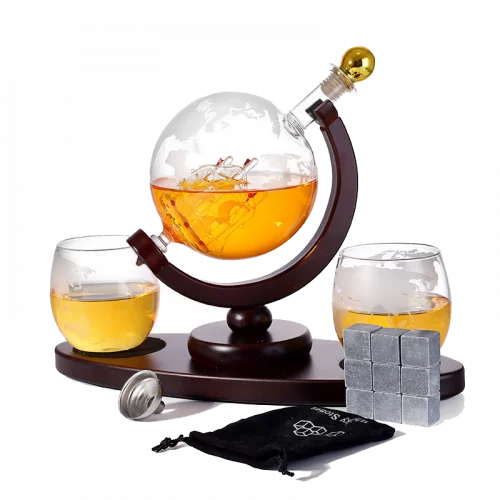
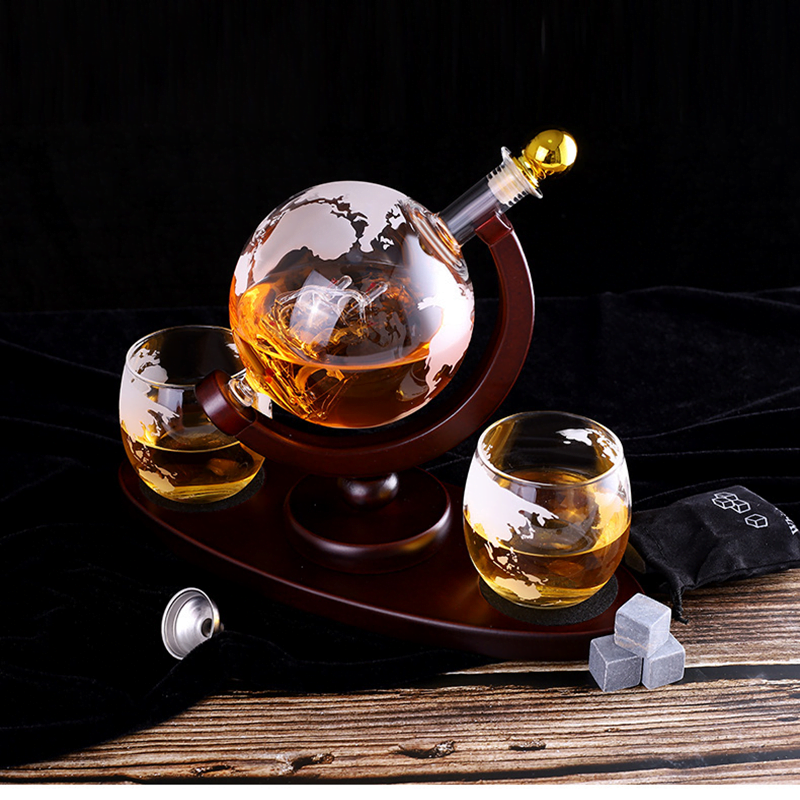
A globe whiskey decanter usually has an etched map of the world on its surface. Often, there's a beautifully crafted glass ship inside, making it very special. Most are made of glass and sit on a wooden stand, which lets them spin. They come in different sizes, typically holding around 850ml, enough for a standard bottle. People are drawn to their unique look; they are true eye-catchers. As an expert, I've noticed that while most admire the beauty, some worry about fragility or the clarity of the etching. Good quality control here is key.
The Clear Choice: Benefits of Borosilicate Glass Globe Decanters
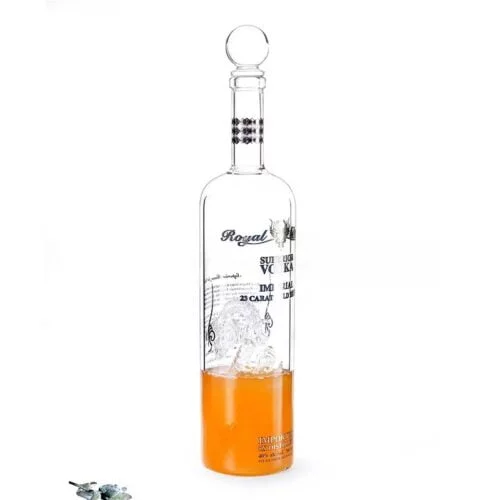
Borosilicate glass is a top choice for globe decanters, and for good reason. This type of glass is much stronger than regular glass. It can handle bumps and changes in temperature better, like when you wash it. This glass is also very clear. This means your drink looks great, and you can see any neat designs inside, like a ship. Importantly, borosilicate glass is safe. It does not let any unwanted tastes or chemicals into your drink. It's also easy to keep clean. Plus, it is better for our planet because it lasts a long time and can be recycled. Many borosilicate glass manufacturers specialize in this superior material.
Home Bars and Special Gifts: Why Demand for Unique Globe Decanters is Rising
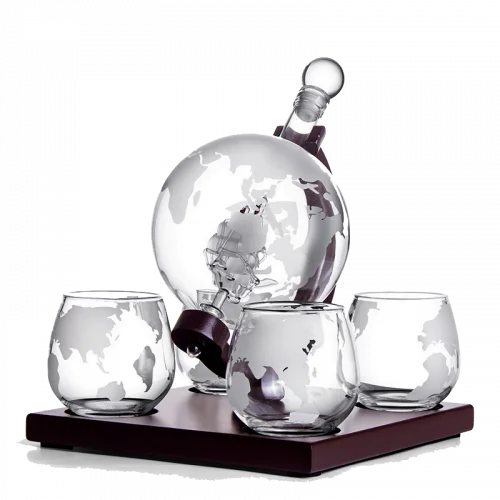
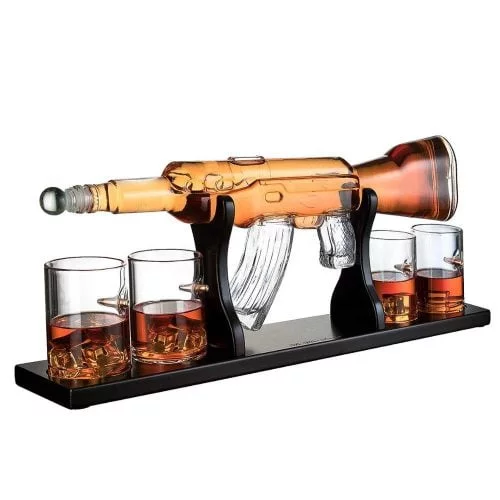
More people want unique globe decanters for two main reasons: home bars and gifts. Many are creating cozy bar areas in their homes. They look for special items to make these spaces look good. Globe decanters fit perfectly. Also, people are choosing to buy better quality drinks and the barware that goes with them. A globe decanter is a very popular gift. It looks thoughtful and different. The way a decanter looks is a big part of why people buy it. They want something that adds to their home's style. Some even explore other unique options like AK-47 Whiskey Decanters.
Standing Out: From Custom Ship Shaped Wine Bottles to Unique Globe Designs
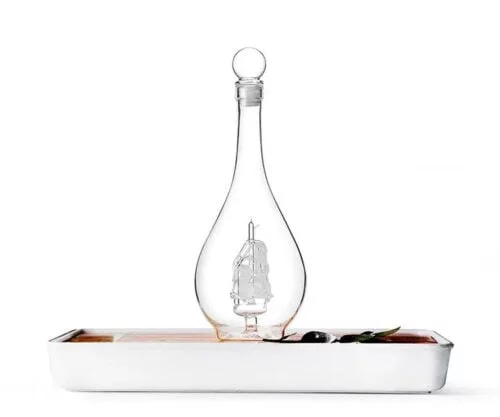
Many companies sell globe decanters. Some are well-known brands, while others are smaller makers. To stand out, companies try different things. They might put very detailed glass art inside, like tiny ships or even a Dragon Borosilicate Glass Bottle design. Using high-quality materials like borosilicate glass is another way to be special. Selling decanters as sets, with matching glasses, is also popular. Good prices can attract buyers too. For businesses, the ability to create custom bottle designs is a big plus, allowing them to offer truly one-of-a-kind pieces to their customers.
What’s Next? Greener and More Personalized Glass Bottles
Looking ahead, people will want globe decanters that are kind to the Earth. Borosilicate glass is a great pick here because it lasts long and can be recycled. Making decanters special for one person or company is also becoming a big trend. Think of a personalized glass bottle with a unique etching. We might see new designs, perhaps even decanters with soft lights. More shopping will happen online, often straight from makers like Ingcho.com. The goal is to make enjoying a drink at home feel even more special. Learning about the art and science of crafting globe decanters shows how much work goes into these pieces.
Finding Your Perfect Pour: Choosing the Best Globe Decanter Supplier
When you want to find the best globe decanter supplier, look for a few key things. It's good if they talk about using borosilicate glass. This shows they care about strength and safety. Pick suppliers who can make unique designs or offer to create something just for you. Pay attention to quality. The etching should be clear, and the stand should be sturdy. Thinking about eco-friendly choices is also smart. A good website with clear pictures helps you pick the right decanter. For more great information, you can always check out Ingcho.com's blog.
Frequently Asked Questions (FAQs)
Q1: Why are globe decanters so popular? A1: Globe decanters are popular because they look very nice with their world map designs and often have a cool glass ship inside. They make great decorations, start conversations, and are excellent gifts for many occasions.
Q2: Is borosilicate glass really better for a decanter? A2: Yes, borosilicate glass is a great choice. It's stronger than normal glass, can handle temperature changes better, is very clear, and doesn't let any bad tastes into your drink. It's also more durable.
Q3: Are globe decanters only for whiskey? A3: While many people use globe whiskey decanters, you can use them for other spirits too, like wine, rum, or brandy. The main idea is to store and serve your drink in a stylish way.
Q4: What should I look for if I want a good quality globe decanter? A4: Look for clear, well-done etching on the globe. If it has a ship inside, check that it's detailed. The glass should feel sturdy, not too thin. A solid stand is also important. Choosing one made from borosilicate glass is a good sign of quality.
Q5: Are there new trends in globe decanter designs? A5: Yes, people are looking for more sustainable options, like those made from recyclable borosilicate glass. Personalized designs are also becoming popular, where you can get custom etchings or unique features. Some newer designs might even include subtle lighting.
Here's a simple look at how globe decanters are made:
Key Takeaways:
- Special Glass: Globe decanters often use strong borosilicate glass.
- Many Parts: They have a glass globe, a stopper, a stand, and a small tap. Some even have tiny glass ships inside.
- Made with Care: Making the globe involves melting glass very hot and shaping it. Other parts like wooden stands are also crafted.
- World Map Design: The map on the globe is usually etched on with sand or special cream.
- Put Together Carefully: All parts must fit perfectly, especially the tap, so it doesn't leak.
- Quality Check: Makers check for good quality, like no cracks and clear designs.
- Good for Earth: Using recycled glass and safe materials helps the planet.
What Makes a Glass Globe Decanter Special?
A glass globe decanter is not just a fancy bottle. It’s a piece of art that makes any room look interesting. People love to talk about it when they see one. These decanters are very popular as gifts for big days, like birthdays or when someone does something great. Makers like Ingcho Glass Products take pride in making these. They often use a special, strong kind of glass called borosilicate, which you might know as Pyrex. This glass helps make the decanter beautiful and last a long time. As an expert, I can tell you the choice of glass is super important for both looks and strength.
Parts of a Globe Decanter Set: What's Inside?
A globe decanter set has several important parts. The main part is the big glass ball, the globe. This often has a map of the world etched on it. Then there's the stopper, which sits on top. It can be made of glass, wood, or cork and keeps the drink inside fresh. The globe needs a stand to sit on, usually made of wood or metal. For pouring, there's a little tap called a spigot. A really neat touch in some globe decanters is a tiny glass ship sailing inside, showing amazing glass art, much like the detail in this Custom Ship Shaped Wine Bottle.
Making the Glass Globe: From Sand to Sphere with Borosilicate Glass
The journey of making the glass globe is amazing. It starts with simple things like sand, soda ash, and limestone. Companies like Ingcho often use a special type called borosilicate glass, which is very strong and clear. These materials are melted in a super hot furnace until they become liquid glass. Then, skilled workers or machines blow this molten glass into molds to give it the round globe shape. Borosilicate glass is great because it doesn't break easily with temperature changes and keeps drinks pure. After shaping, the glass goes through annealing – a slow cooling process. I've seen that skipping proper annealing leads to a lot of broken glass later on, which is a waste. This step is vital for all custom glass bottles.
Crafting Other Cool Parts for Your Globe Wine Decanter
Besides the main globe, a globe wine decanter has other parts that need careful making.
- Glass Stoppers: These are often made by pressing hot glass into a mold. They need to fit tightly.
- Wooden Stands: Wood is shaped by hand carving for unique looks or by machines for exact shapes. Then it's stained or painted.
- Metal Stands: Metal is bent and shaped, sometimes getting a shiny coating like copper.
- Spigots (Taps): These must be safe for drinks. So, they are usually stainless steel or a special food-safe plastic.
- Tiny Glass Ships: If there's a ship inside, it's made by hand using a hot torch. This is called lampworking. It's like the art seen in this Dragon Borosilicate Glass Bottle, requiring great skill.
Drawing the World: How Maps Get on Globe Decanters
The world map is a famous feature of globe decanters. This design is usually etched onto the glass. Etching means making a frosted or matte look on the smooth glass. There are a few ways to do this:
- Sandblasting: Tiny bits of sand are shot at the glass through a stencil (a pattern). This carves the map onto the surface.
- Etching Cream: A special chemical cream is put on the glass with a stencil. The cream eats away a thin layer of glass, leaving the map design.
- Laser Etching: A laser beam can draw very fine and exact lines for the map.
Other ways to decorate unique glass bottles include screen printing or even careful hand-painting for special editions.
Putting It All Together: Assembling Your Whiskey Globe Decanter
Once all the parts are ready, it's time to assemble the whiskey globe decanter. The glass globe is carefully placed onto its stand. Some designs even let the globe spin, just like the real Earth! The spigot, or tap, needs to be fitted very carefully. It goes through a hole in the glass and must have good seals, usually silicone washers, so no drink leaks out. This is a step where you can't rush; a good seal is everything. If the decanter comes as a set, matching glasses or a funnel are added. Finally, careful packing is super important for all glass decanters to make sure they arrive safely.
Good Quality Matters: Handmade vs. Machine-Made Custom Glassware
When you look at custom glassware, you might wonder if it's handmade or machine-made. Machine-made glass items usually all look exactly the same and are often less expensive. Handmade glass, like Ingcho's handcraft borosilicate glass liquor bottles, means each piece is a little bit unique. An expert artisan shapes it, so it has a special touch. Checking for quality is key for both. This means no leaks from the spigot, no cracks in the glass, and the map or any design should look clear and neat. People really appreciate cool, well-made bar items that look good and work well. From experience, a little wobble or a poorly etched map can really disappoint a customer.
Caring for Our Planet: Making Borosilicate Glass Bottles the Green Way
Making things, even beautiful borosilicate glass bottles, can affect our Earth. So, good makers try to be green. One big way is using recycled glass, called cullet. Adding cullet when melting new glass saves energy and uses up less new sand and other raw stuff from the earth. Plus, borosilicate glass itself can be recycled. Factories also try to save energy with better machines and save water. If wooden stands are used, the wood should come from forests that are looked after well. Using safe, eco-friendly paints and finishes also helps. Companies like Ingcho can show they care by being open about these green steps. It’s good for the planet and makes people feel good about what they buy.
Frequently Asked Questions (FAQs)
Q1: What is a globe decanter made of? A1: The main globe is usually made of glass, often strong borosilicate glass. The stand can be wood or metal, and the stopper can be glass, wood, or cork. The little tap (spigot) is often stainless steel.
Q2: How is the map put on a globe decanter? A2: The map is usually etched onto the glass. This can be done by sandblasting (using fine sand), with a special etching cream, or with a laser.
Q3: Is it hard to make a globe decanter? A3: Yes, it takes skill. Blowing the glass globe, crafting the stand, etching the map, and especially adding a tiny glass ship inside, all need careful work by talented people or precise machines.
Q4: Why do some globe decanters have a ship inside? A4: The ship inside is a very decorative touch. It makes the decanter look even more special and shows off amazing glassmaking skill, similar to these artistic custom ship bottles.
Q5: Are globe decanters strong? A5: If they are made from borosilicate glass, they are quite strong and can handle temperature changes better than regular glass. But, like all glassware, they should be handled with care.
Q6: How do I clean a globe decanter? A6: It's usually best to handwash a globe decanter carefully with warm water and a soft bottle brush if needed. Avoid harsh soaps if the etching is delicate.
Q7: Can Ingcho make a custom globe decanter for me? A7: Ingcho specializes in custom glass bottle designs and OEM orders, so they are a good contact for custom globe decanter requests.
Key Takeaways
- Borosilicate glass is stronger than regular glass and can handle big temperature changes without breaking
- The glass contains silica (70-80%) and boron oxide (10-15%), giving it special heat-resistant properties
- Hand-blown borosilicate items are made through a 7-step process: material selection, softening, blowing, cutting, shaping the mouth, creating a base, and annealing
- These glass products last longer, don't react with foods or chemicals, and are fully recyclable
- The market for borosilicate glass is growing fast, expected to reach $4-7 billion by 2034
- Making hand-blown glass items takes both artistic skill and technical knowledge, with a steep learning curve
- Buying high-quality borosilicate products can be a better value despite higher upfront costs
What Makes Borosilicate Glass Special?
Borosilicate glass isn't just any glass. It's a tough material that can handle both hot and cold without cracking. This makes it perfect for many uses, from kitchen items to art pieces.
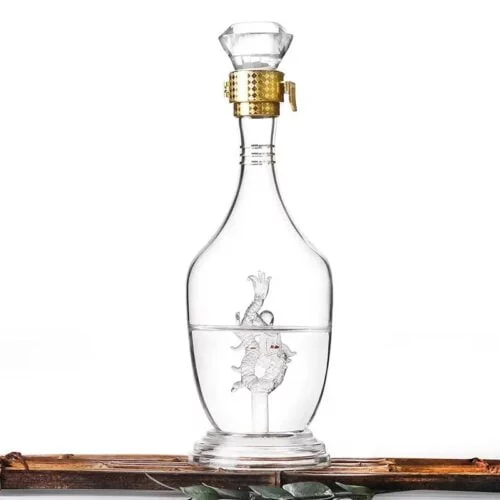
Unlike regular glass, borosilicate contains boron oxide (10-15%) mixed with silica (70-80%). This mix gives it special powers! The glass can withstand big temperature changes without breaking. If you put a hot borosilicate glass jar in cold water, it won't shatter like normal glass.
Heat Resistance That Amazes
The most impressive thing about borosilicate glass is how it handles heat. When most materials get hot, they expand. When they cool, they shrink. This expanding and shrinking can cause cracking. But borosilicate glass barely changes size when heated or cooled.
This glass can handle temperatures from very cold to over 500°F (260°C). The science behind this is simple: borosilicate glass has a low "thermal expansion coefficient" - about one-third that of regular glass. This means it stays almost the same size when heated.
For people who love to cook, this means you can take a borosilicate dish from the freezer and put it straight in a hot oven without worry!
Strong and Clear for Years of Use
Another big plus of borosilicate glass is its strength. It's 4-5 times stronger than regular glass. This means less breaking and longer-lasting products. For anyone who has dropped and broken a glass, this is good news!
The glass also stays clear over time. It doesn't get cloudy or stained like some other materials. This makes it perfect for display bottles and containers where you want to see what's inside.
Safe for Food and Chemicals
If you care about what touches your food and drinks, borosilicate glass is a great choice. It doesn't react with acids, foods, or most chemicals. This means:
- No harmful chemicals leach into your food or drinks
- No metallic taste like you might get with some metal containers
- Safe for storing acidic foods like tomato sauce
This non-reactive quality is why scientists use borosilicate glass in labs. It's also why it makes great whiskey decanters and tequila bottles - it won't change the taste of your drinks!
Better for the Planet
In a world where we all try to reduce waste, borosilicate glass is a smart choice. It's:
- Made from natural materials
- Fully recyclable
- Free from toxic chemicals
- Long-lasting, so less need to replace items
Many people are switching from plastic to glass for these reasons. A high-quality borosilicate bottle might cost more upfront, but it can last for many years.
The Art of Making Hand-Blown Borosilicate Glass
Creating hand-blown borosilicate glassware is both a science and an art. Let's look at how skilled craftspeople turn raw glass into beautiful and useful items.
Step 1: Picking the Right Glass
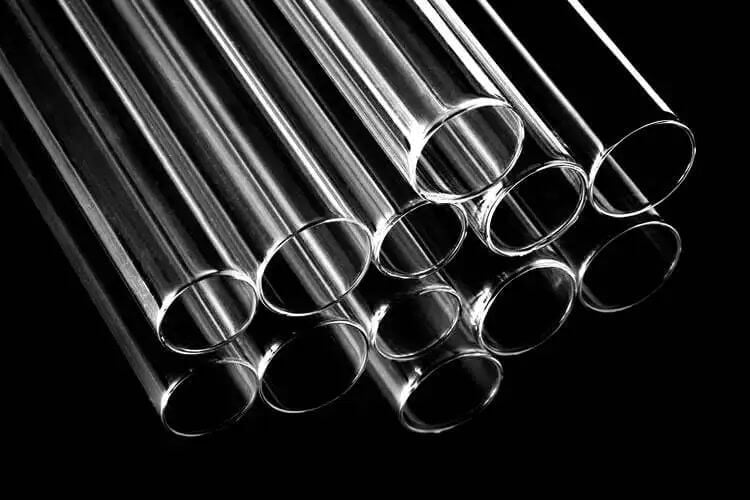
Everything starts with selecting the right glass. Borosilicate glass comes in tubes or rods of different sizes and colors. The glassblower chooses based on what they want to make.
The glass must be high-quality and free from bubbles or impurities. Some common types include CORNING® EAGLE 2000® and SCHOTT BOROFLOAT® 33. Each type has slightly different properties.
Step 2: Heating the Glass Until Soft
Before shaping can begin, the glass must be heated to its "softening point" - around 1500°F (815°C). This is much hotter than regular glass needs!
Glassblowers use different heat sources:
- Torches (for smaller works)
- Glory holes (furnaces for larger pieces)
- Specialized kilns
The heating must be even and controlled. Too hot, and the glass becomes runny. Not hot enough, and it won't shape properly.
Step 3: The Magic of Blowing and Shaping
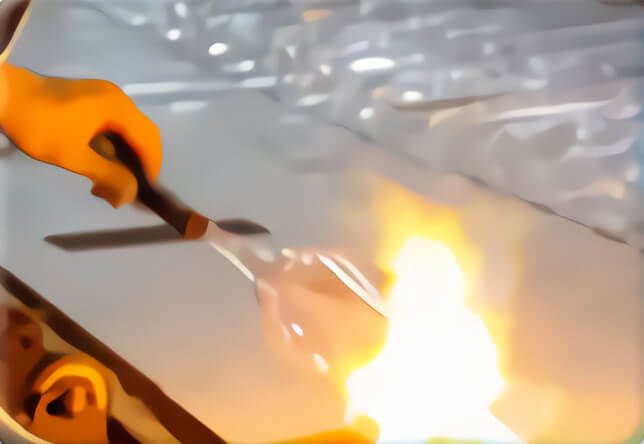
This is where skill really shows. The glassblower gathers molten glass on a blowpipe and begins to shape it.
With controlled breaths, the artist blows through the pipe to create a bubble in the glass. While the glass is still hot, they use tools to shape it:
- Wooden blocks to smooth and round
- Metal jacks (like large tweezers) for pinching and shaping
- Paddles for flattening
- Marvers (flat surfaces) for rolling and shaping
The glass must be constantly reheated during this process as it cools quickly. Each custom bottle design requires different techniques and tools.
Step 4: Cutting with Precision
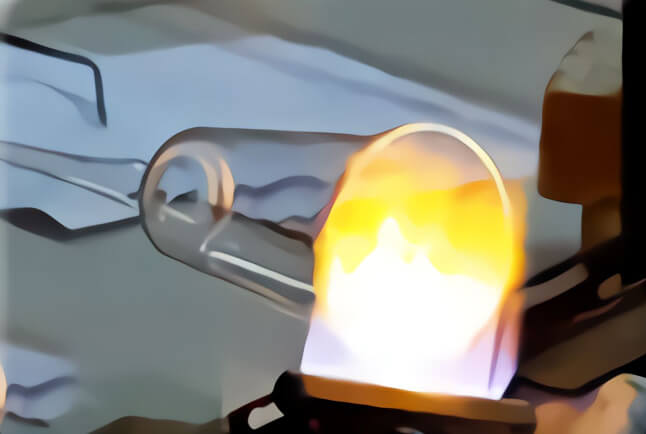
Once the basic shape is formed, cutting might be needed. This is done with special tools:
- Tungsten carbide knives
- Diamond cutting wheels
- Glass scoring tools
The glassblower creates a score line on the surface, then applies pressure to make a clean break. This requires practice and a steady hand - one wrong move can ruin hours of work!
Step 5: Crafting the Perfect Opening
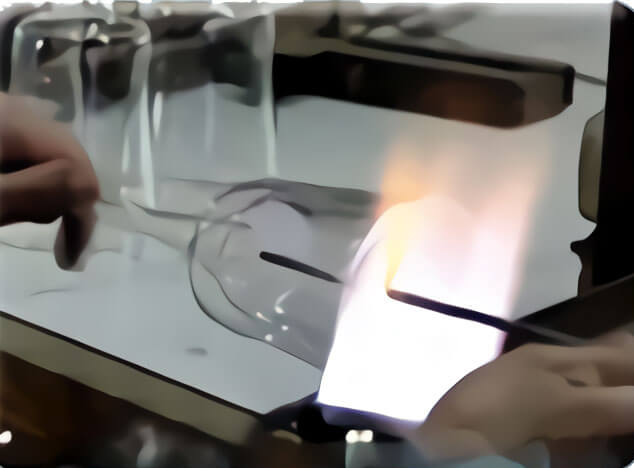
The mouth or opening of a glass bottle or container needs special attention. It might need to:
- Fit a cork or stopper
- Pour smoothly without dripping
- Have threads for a screw cap
Glassblowers use tools like jacks to shape the opening precisely. For items like decanters, the opening must be wide enough to fill easily but narrow enough to pour well.
Step 6: Creating a Stable Base
For items that need to stand, a flat and stable base is essential. The glassblower can:
- Press the heated base against a flat surface
- Use paddles to flatten the bottom
- Add a separate piece of glass as a foot
This step ensures your whiskey decanter or tequila bottle won't tip over easily.
Step 7: Annealing - The Crucial Final Step
This might be the most important step, though it's invisible to the eye. Annealing is a controlled cooling process that removes internal stress from the glass.
The finished piece is placed in a kiln and held at about 1050°F (566°C) for hours, then slowly cooled - often at just 1-2 degrees per minute. For thick pieces, this can take days!
Without proper annealing, the glass might seem fine but could crack or shatter later. This step is what makes handcrafted borosilicate glassware durable for years of use.
Tools of the Trade: Equipment for Borosilicate Glassblowing
Creating hand-blown glass requires specialized tools. Here's what glassblowers need:
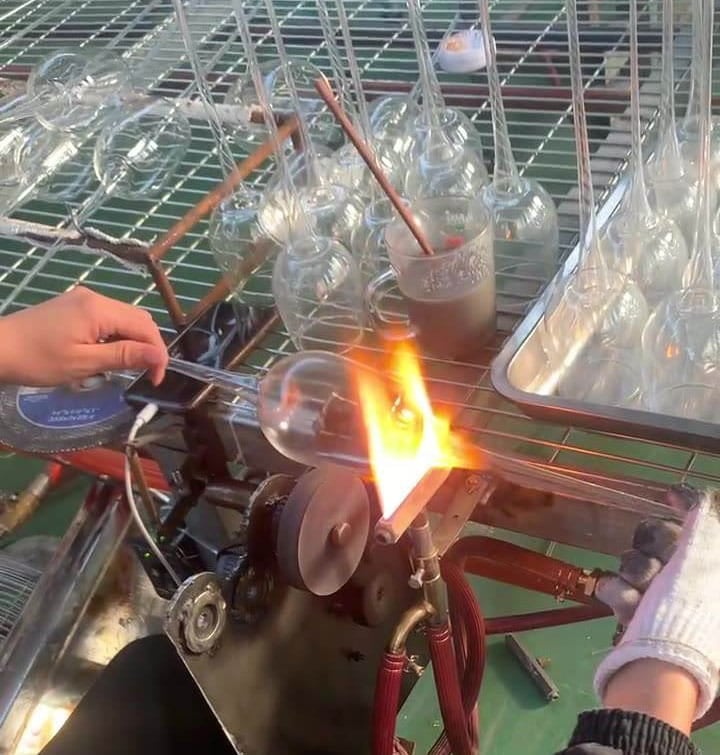
Heating Equipment
The heart of any glass studio is its heat sources:
Torches: Using a mix of oxygen and propane, these reach the high temperatures needed for borosilicate glass. They allow precise heating of small areas.
Glory Holes: These furnaces keep glass hot while working on larger pieces.
Kilns: Used for annealing and sometimes pre-heating glass.
Good temperature control is essential. Too cool, and the glass won't shape properly. Too hot, and it becomes too runny to work with.
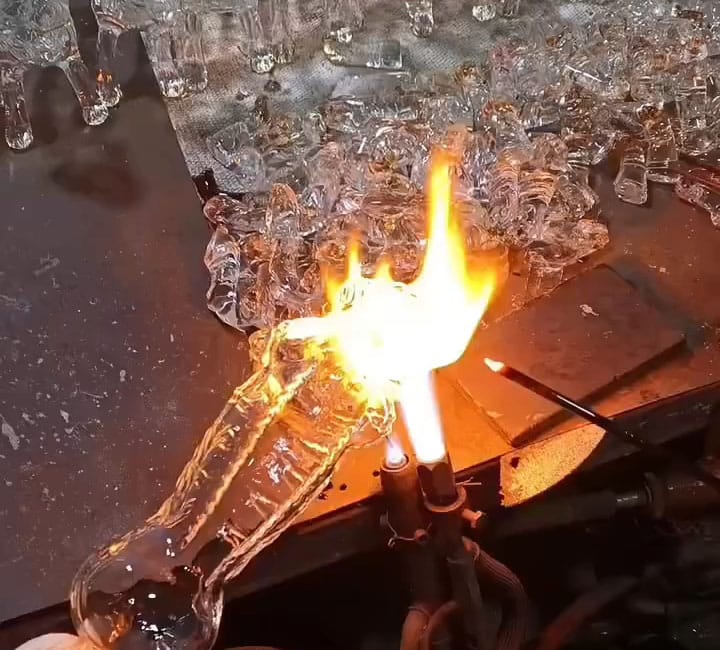
Shaping Tools
These help form the molten glass:
Blowpipes: Hollow metal tubes through which air is blown to inflate the glass.
Marvers: Flat surfaces (usually steel or graphite) for rolling and cooling glass.
Jacks: Large tweezers-like tools for pinching and shaping.
Blocks: Traditionally made of cherry wood, these cup-shaped tools help shape and smooth glass.
Paddles: Used to flatten areas of glass.
Tungsten Picks: For making small adjustments and details.
The right tools make the difference between a basic shape and a beautiful unique bottle design.
Cutting Equipment
For precise cutting:
Diamond Shears: For cutting hot glass.
Scoring Tools: Create lines where the glass will break.
Diamond Saws: For more complex cuts.
Dremel Tools: Sometimes used with diamond bits for detailed work.
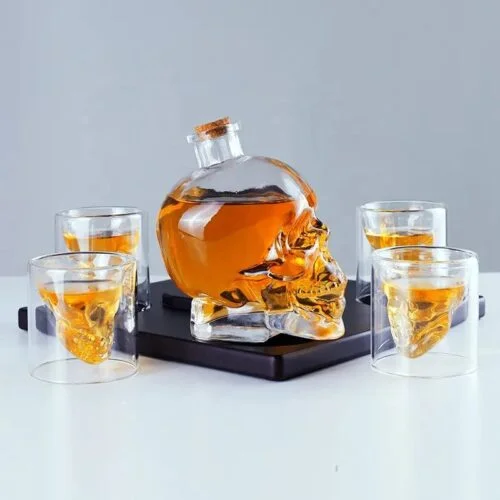
Clean cuts are essential, especially when creating pieces like the Skull Head Whiskey Bottle with complex shapes.
Safety Equipment
Working with glass heated to over 1500°F requires serious safety gear:
Didymium Glasses: Special glasses that filter the bright light from hot glass.
Heat-Resistant Gloves: Protect hands from burns.
Ventilation Systems: Remove fumes and maintain good air quality.
Fire Extinguishers: For emergency situations.
Safety is never optional when working with molten glass!
The Market for Borosilicate Glass: Growing Demand
The market for borosilicate glass is booming. Several studies show strong growth:
Market Size and Growth
The global borosilicate glass market is expected to grow significantly:
| Year | Projected Market Size (USD Billions) |
|---|---|
| 2024 | 2.1 - 4.5 |
| 2030 | 3.2 - 7.0 |
This represents a steady growth rate of 4.5% to 8.3% per year. The market is expanding in regions across the world.
What's Driving this Growth?
Several key factors are pushing the demand for borosilicate glass:
Health Consciousness: People want containers that don't leach chemicals into food and drinks.
Environmental Concerns: The shift away from plastics benefits glass products.
Durability: Consumers recognize the long-term value of borosilicate glass.
Specialty Food and Drink Market: Growth in premium spirits like tequila and whiskey drives demand for high-quality bottles and decanters.
Scientific and Medical Needs: Labs require non-reactive, heat-resistant glassware.
These trends suggest a bright future for borosilicate glass manufacturers.
What Consumers Want
Today's buyers look for specific features in their glass products:
- Heat Resistance: For cooking and baking items
- Durability: Products that last longer
- Non-Toxic: Safe for food and beverages
- Aesthetics: Beautiful designs like globe decanters or skull bottles
- Sustainability: Eco-friendly alternatives to plastic
Hand-blown borosilicate items meet all these needs, making them increasingly popular.
Popular Products in the Market
Some of the most sought-after borosilicate glass items include:
- Kitchen and Bakeware: Heat-resistant cooking tools
- Decanters and Bar Accessories: For spirits and wine
- Storage Containers: For food and other items
- Custom Bottles: For beverages and spirits
- Artistic Pieces: Decorative items and sculptures
Specialty designs like the AK-47 Rifle Decanter or Dragon Tequila Bottle show how creative and diverse this market has become.
Learning the Craft: Time and Skill Investment
Becoming skilled at borosilicate glassblowing isn't easy. It requires commitment, patience, and practice.
The Learning Journey
Learning to work with borosilicate glass follows this path:
- Beginner Stage: Learning basic safety and simple techniques through classes (typically 12+ hours of instruction)
- Intermediate Stage: Creating more complex forms and mastering basic skills
- Advanced Stage: Designing and executing intricate pieces like skull vodka bottles or globe decanters
The initial learning curve is steep. Many beginners find that borosilicate glass, while requiring higher temperatures, is actually easier to control than soft glass because it stays stiffer when molten.
Time Requirements for Different Techniques
Each technique takes time to master:
- Basic Forms: 3-6 months of regular practice
- Hollow Forms: 1-2 years
- Complex Decorative Techniques: 2+ years
- Artistic Mastery: 5+ years or more
Even a seemingly simple glass jar with lid requires multiple skills working together.
The Production Time Factor
Creating a single piece can take:
- Simple Items: A few hours
- Complex Pieces: Multiple days
- Annealing Time: Additional hours to days
The glass globe decanter might take days to create due to its complex shape and the need for perfect clarity.
Is It Worth Learning?
For those passionate about glasswork, the investment in learning borosilicate techniques can be rewarding. Benefits include:
- Creating unique, high-quality pieces
- Developing a marketable skill
- The satisfaction of mastering a challenging craft
- Potential business opportunities in custom glassware
The craft combines artistic expression with technical skill, making it deeply satisfying for those who persevere.
Cost Factors in Hand-Blown Borosilicate Production
What goes into the cost of these beautiful glass items? Let's break it down.
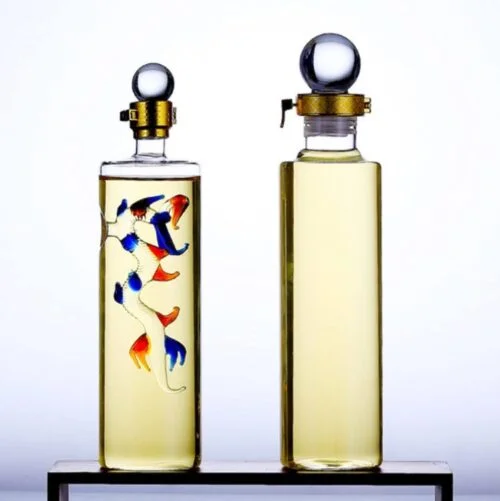
Material Costs
The raw materials for borosilicate glass include:
- Glass Tubes: $1-10 each, depending on size
- Glass Rods: $5-20 per pack
- Colored Glass: $10-100+ for specialty colors
- Tools: Significant initial investment of $500-5000+
High-quality borosilicate glass costs more than standard glass, but this quality is what gives the final products their special properties.
Energy Expenses
Making glass is energy-intensive:
- Electricity: 30-46 kWh daily for a small studio
- Propane/Natural Gas: 5-10 gallons per work day
- Annealing Kiln: Runs for hours or days per piece
These costs can add up quickly, especially for items requiring multiple heating cycles like the Globe Whiskey Decanter.
The Labor Factor
Perhaps the biggest cost is skilled labor:
- Time Investment: Hours to days per piece
- Skill Level: Years of practice required
- Attention to Detail: Constant focus during the entire process
A master glassblower might spend 8+ hours creating a single complex piece like a Tequila Bottle with Flower.
Production Scale Considerations
Scale affects cost in surprising ways:
- Small Scale: Higher per-piece cost but more flexibility
- Medium Scale: Better efficiency but still hand-crafted
- Large Scale: Lower per-piece cost but major equipment investment
Most artisanal borosilicate products are made in small to medium batches, preserving quality and uniqueness.
Cost-Saving Strategies
Some ways producers can reduce costs:
- Using Recycled Glass (Cullet): Reduces material costs
- Energy-Efficient Equipment: Lowers utility bills
- Multi-Purpose Tools: Reduces equipment investment
- Optimized Studio Layout: Improves workflow efficiency
These strategies help make beautiful pieces like tequila bottles with agave plants more affordable.
Understanding the Price Tag
When you see a hand-blown borosilicate piece with a higher price, remember what goes into it:
- Years of skill development
- Hours of intense labor
- Premium materials
- High energy costs
- Durability that lasts decades
The price often reflects true value - a Globe Decanter Set might cost more upfront but can last a lifetime with proper care.
Comparing Hand-Blown vs. Machine-Made Borosilicate Glass
Not all borosilicate glass is created equal. Here's how hand-blown compares to machine-made:
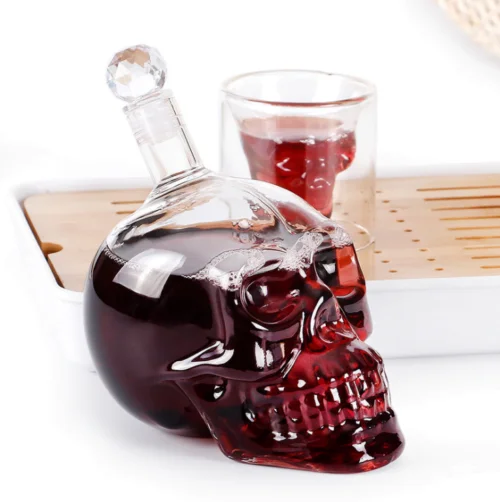
Unique Characteristics of Hand-Blown Glass
Hand-blown borosilicate pieces offer:
- Uniqueness: No two pieces are exactly alike
- Character: Slight variations that show human touch
- Custom Designs: Ability to create one-of-a-kind items
- Artistic Expression: The glassblower's personal style shines through
Each skull tequila bottle has its own character, making it special.
Machine-Made Benefits
Machine-made borosilicate products have their own advantages:
- Consistency: Each piece looks identical
- Lower Cost: Mass production reduces price
- Precision: Exact measurements and shapes
- Availability: Produced in larger quantities
Products like basic laboratory glassware often benefit from this consistency.
Quality Comparisons
How do they differ in quality?
- Strength: Well-made hand-blown items can be stronger due to careful annealing
- Thickness: Hand-blown pieces often have variable thickness for strength where needed
- Durability: Both can be very durable with proper care
- Heat Resistance: Both offer excellent thermal properties
For items like the Globe Wine Decanter, hand-blowing allows the creation of complex forms that machines struggle to produce.
Aesthetic Value
When it comes to looks:
- Hand-Blown: Organic, artistic, with subtle variations
- Machine-Made: Clean, consistent, uniform appearance
Many collectors prefer the artistic qualities of hand-blown items like the Custom Ship Shaped Wine Bottle.
Price-to-Value Ratio
Is the higher price of hand-blown items worth it?
- Hand-Blown: Higher initial cost but unique value and often better craftsmanship
- Machine-Made: Lower cost and good for functional items where aesthetics matter less
For special items like whiskey decanters, the value of hand-blown craftsmanship often justifies the price.
Creative Applications of Borosilicate Glass
The unique properties of borosilicate glass open up endless creative possibilities.
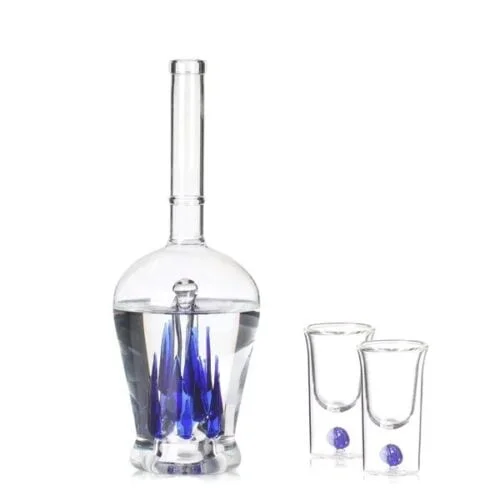
Innovative Kitchen and Dining Items
Borosilicate glass excels in the kitchen:
- Bakeware: Oven-to-table dishes that won't crack
- Tea and Coffee Items: Heat-resistant pots and cups
- Storage Containers: Like the Glass Jar with Bamboo Lid that keeps food fresh
- Serving Pieces: Beautiful and practical platters and bowls
The glass can go from freezer to oven and looks great on the table too.
Artistic Spirit Bottles and Decanters
Some of the most creative uses are for spirits:
- Skull Head Whiskey Bottle: Shows how glass can be formed into complex shapes
- AK-47 Rifle Decanter: Demonstrates detailed sculptural possibilities
- Tequila Bottle with Dragon: Combines container and art
- Globe Decanter: Creates a stunning visual effect
These pieces are both functional containers and conversation-starting art.
Specialized Storage Solutions
Borosilicate glass makes ideal storage for:
- Spices and Dry Goods: In airtight jars like the Coffee Bean Glass Jar
- Pantry Items: In clear containers that show contents
- Bathroom Products: In decorative yet practical jars
- Craft Supplies: In custom organizers
The non-reactive nature makes these containers safe for almost anything.
Decorative and Functional Art
Beyond practical uses, borosilicate glass creates beautiful art:
- Sculptural Pieces: Pure art with no practical function
- Light Fixtures: Taking advantage of the glass's clarity
- Wall Art: Incorporating color and form
- Mixed Media: Combining glass with other materials
The Interior Rose Glass Bottle shows how decorative elements can be incorporated into functional items.
Brand Expression Through Custom Designs
For businesses, custom borosilicate creates powerful branding:
- Unique Packaging: Like custom bottles that stand out on shelves
- Corporate Gifts: High-quality items with lasting value
- Display Pieces: For showcasing products or concepts
- Brand Identity Items: That reinforce company image
A custom tequila bottle can help a spirit brand build recognition and premium positioning.
Caring for Your Borosilicate Glass Collections
To keep your borosilicate glass looking and performing its best, follow these care tips:
Cleaning Best Practices
Keep your glass sparkling with these methods:
- Daily Cleaning: Warm water and mild soap is usually enough
- Avoiding Scratches: Don't use abrasive sponges or cleansers
- Hard Water Spots: A vinegar solution can remove these
- Stubborn Residue: Soak in warm soapy water, then gently scrub
- Drying: Air dry or use a lint-free cloth to avoid water spots
For special pieces like a Globe Decanter Set, gentle hand washing is best.
Safe Handling Techniques
Prevent damage by handling properly:
- Support the Base: Don't pick up items by their necks or handles alone
- Avoid Temperature Shock: Though borosilicate handles this better than regular glass, extreme changes should still be avoided
- Careful Placement: Set down gently on soft surfaces when possible
- Two Hands: Use both hands for larger items like decanters
Though stronger than regular glass, borosilicate still needs careful handling.
Storage Solutions
Store your glass safely:
- Avoid Stacking: When possible, store items separately
- Soft Dividers: Use felt or cloth between pieces if stacking is necessary
- Stable Surfaces: Store on non-slip shelves
- Display Safely: Secure display methods for decorative pieces like skull bottles
Proper storage prevents chips and cracks.
Fixing Minor Damage
If damage occurs:
- Small Chips: Some can be smoothed with fine sandpaper
- Cracks: Unfortunately, these typically mean the end of the item's useful life
- Professional Repair: For valuable pieces, professional glass repair might be worth considering
Prevention is better than repair with glass items.
Long-Term Preservation
For collectors of items like the Handcraft Borosilicate Glass Liquor Bottle:
- Dust Regularly: With a soft cloth or duster
- Avoid Direct Sunlight: This can affect colored glass over time
- Control Humidity: Very dry or very humid conditions can affect some decorative finishes
- Documentation: Keep records of special or valuable pieces
With proper care, borosilicate glass items can last for generations.
Frequently Asked Questions About Hand-Blown Borosilicate Glassware
What makes borosilicate glass different from regular glass?
Borosilicate glass contains 10-15% boron oxide, which gives it much better heat resistance and strength. It can handle big temperature changes without breaking, is stronger, and doesn't react with foods or chemicals.
How can I tell if my glassware is made from borosilicate?
Look for labels like "borosilicate" or "heat-resistant." Borosilicate glass is often lighter than regular glass and stays cool to the touch even with hot liquids inside. When struck, it produces a clearer ring compared to regular glass.
Is hand-blown borosilicate glass dishwasher safe?
Most borosilicate glass is dishwasher safe, but hand-blown pieces with decorative elements or special designs should be hand washed to preserve their appearance and extend their life.
Why are hand-blown borosilicate items more expensive?
The higher cost comes from several factors: premium materials, skilled labor (often years of training), energy-intensive production, and the time required to create each piece by hand. The durability and uniqueness add value over mass-produced items.
Can borosilicate glass go from freezer to oven?
Yes! This is one of its best features. Borosilicate glass can handle temperature changes of up to 330°F (165°C) without breaking. Always ensure the temperature change isn't extreme and the glass is free from cracks or damage.
How long does it take to make a hand-blown borosilicate glass item?
Simple pieces might take a few hours, while complex items like custom bottle designs can take days. The annealing process alone can take hours or days, depending on the thickness of the glass.
Is borosilicate glass better for storing food than plastic?
Yes, for several reasons. It doesn't leach chemicals into food, doesn't absorb flavors or odors, can handle heat, and is more environmentally friendly since it's fully recyclable and lasts much longer.
Where can I find high-quality hand-blown borosilicate glassware?
Look for specialty glass shops, artisan marketplaces, and reputable online retailers like eric.ingcho.com that specialize in quality glassware like unique globe decanters and custom bottles.
Key Takeaways
- The global tequila market is worth $11.04 billion (2023) and expected to reach $18.58 billion by 2032
- Popular tequila bottle designs include skulls, dragons, flowers, and agave plants
- Mexican culture heavily influences tequila bottle art and shapes
- Brands are using unique bottle designs to stand out in a growing market
- Custom bottles help tequila brands tell their story and build recognition
- Sustainable glass bottles are becoming more popular with eco-conscious consumers
- Borosilicate glass offers durability and premium quality for high-end tequilas
The Growing Tequila Market and Bottle Design Importance
The tequila market is booming. Sales hit $11.04 billion in 2023. Experts think it will grow to $18.58 billion by 2032. In the US alone, people drank 30.6 million cases in 2023. That's a lot of tequila!
When you pick up a tequila bottle, what makes you want to buy it? Often, it's the bottle design. A cool bottle catches your eye first. Brands know this. They spend a lot of time making bottles that stand out on the shelf.
The bottle is not just a container. It tells the story of the tequila inside. A unique bottle shape or design helps you remember the brand. It can make you feel like you're buying something special.
Bottle designs come in many styles. Some are simple and clean. Others are works of art. The best designs match what's inside the bottle. A premium tequila needs a premium bottle. A fun party tequila might have a bright, eye-catching design.
Check out more unique bottle designs for inspiration. Many brands share their design stories on their company blog to connect with customers.
Bottle Design Impact on Sales
Bottles do more than look pretty. They help sell tequila. Studies show that good bottle design can:
- Grab attention in crowded stores
- Make people pick up the bottle
- Help customers remember the brand
- Justify higher prices for premium products
- Create collector's items that fans want to display
In a store filled with options, your bottle needs to stand out. That's why so many brands invest in unique designs.
Cultural Heritage in Tequila Bottle Designs
Tequila comes from Mexico, and its bottles often show Mexican culture. Many designs use symbols and art styles from Mexican history.
The agave plant is a common design element. This makes sense since tequila comes from the blue agave plant. Some bottles are shaped like the agave leaf. Others have agave plants inside the bottle. This connects the drink to its roots.
Day of the Dead imagery is also popular. Skull designs honor this Mexican holiday that celebrates ancestors. These aren't meant to be scary. In Mexican culture, skulls often represent celebration and remembrance.
Mexican art styles inspire many bottle designs. Bright colors, patterns, and hand-painted details show up on premium bottles. Some brands hire local artists to decorate their bottles. This supports Mexican art and makes each bottle special.
To understand these designs better, learn about the different types of agave used in tequila. The type of agave affects the taste and the story behind the bottle design.
The Story Behind the Designs
Each design element has meaning:
- Agave plants: Show the tequila's main ingredient and connection to the land
- Skulls: Celebrate Mexican Day of the Dead traditions
- Bright colors: Reflect the vibrant culture of Mexico
- Hand-painted details: Honor Mexican craftsmanship
- Traditional patterns: Connect to Mexico's artistic heritage
To appreciate tequila bottle art fully, it helps to understand what agave tequila is and why it matters to Mexican culture.
Popular Tequila Bottle Designs in 2025
In 2025, several design styles are trending in the tequila world. Each style appeals to different customers and tells a different story.
Skull Designs
Skull bottles remain very popular. These aren't just for Halloween! Mexican culture sees skulls as a celebration of life, not something scary. The Tequila Bottle Skull design uses this tradition to create bottles that stand out.
Skull bottles come in many styles:
- Simple glass skulls
- Detailed crystal skulls with facets
- Colored glass skulls
- Skulls with added decorations
These bottles often become collector's items. People keep them long after the tequila is gone.
Dragon Designs
Dragon bottles have grown popular in recent years. The Tequila Bottle with Dragon design combines Asian and Mexican influences. These bottles often use the dragon as a symbol of strength and power.
Dragon designs include:
- Dragons wrapped around the bottle
- Dragon-shaped bottles
- Bottles with etched dragon designs
- Dragons incorporated into the cap or label
These designs appeal to collectors and make great gifts.
Flower and Plant Motifs
Floral designs connect tequila to the natural world. The Tequila Bottle with Flower design shows how plants can make a beautiful bottle.
Popular plant designs include:
- Agave leaf shapes
- Flowers from the Mexican countryside
- Cactus designs
- Vines wrapping around bottles
- Embedded dried flowers inside the glass
These nature-inspired bottles often appeal to people who appreciate tequila's natural origins.
Hybrid and Custom Designs
Many brands mix design elements. A bottle might combine skull imagery with floral patterns. Others use traditional shapes with modern decorations. The goal is to create something unique that customers will remember.
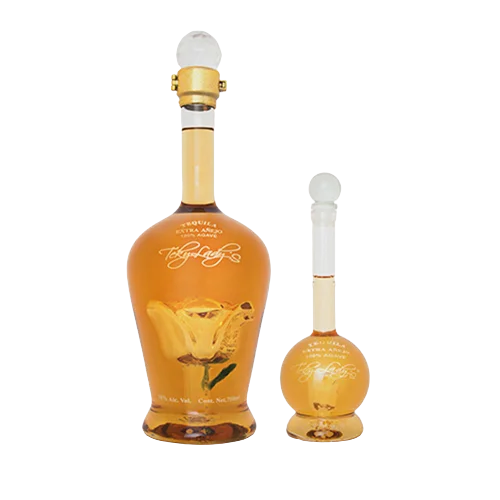
Artistry in Glass Tequila Bottles
Glass tequila bottles have become art pieces. The best examples show amazing skill and creativity. When you see a truly special bottle, you're looking at both art and craftsmanship.
Handcrafted Elements
Many premium tequila bottles are partly or fully handmade. This might include:
- Hand-blown glass sections
- Hand-painted decorations
- Hand-etched designs
- Custom stoppers made by artists
- Hand-applied details like metal work
These handcrafted touches make each bottle slightly different. This adds value for collectors who want something unique.
Some bottles take days to create. Artists work with glassblowers to turn simple designs into beautiful bottles. This process is worth learning about if you love tequila bottle design.
To see examples of artistic bottles, check out Masterpieces in Glass: Artistic Tequila Bottles. This collection shows how far designers can push the boundaries.
Design Process
Creating an artistic bottle starts with an idea. Designers think about:
- The brand's story and values
- The target customer
- The price point
- The tequila's flavor profile
- Mexican cultural elements to include
After the initial design, artists make prototypes. They test different shapes, colors, and decorations. Once the design is approved, production can begin.
For a deeper look at this process, read about Unveiling the Art of Tequila Bottle Design. This article explores how designers blend creativity with practical concerns.
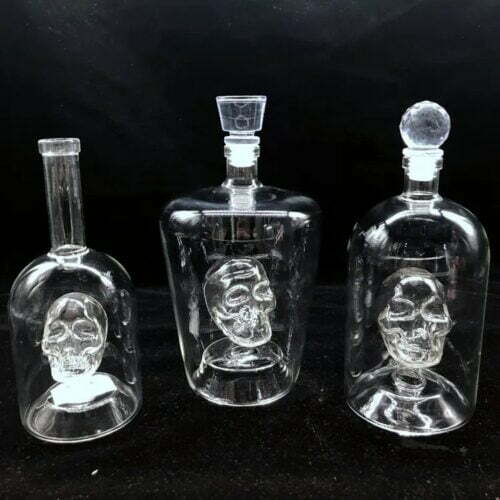
Manufacturing Process of Glass Tequila Bottles
How are these amazing bottles made? The process combines old traditions with new technology.
Glass Materials
Most tequila bottles use one of these glass types:
- Standard glass: Used for basic bottles
- Crystal glass: Used for premium bottles with clarity
- Borosilicate glass: Stronger glass that resists temperature changes
- Recycled glass: Eco-friendly option gaining popularity
The glass type affects the bottle's weight, clarity, and strength. It also impacts how well designers can create detailed shapes.
Production Techniques
Several techniques bring bottle designs to life:
Glassblowing
Hand-blown bottles are made by skilled artisans. They heat glass until it's soft, then blow air through a tube to shape it. This old method creates unique, artistic bottles. Learn more about Glassblowing Techniques for Agave Tequila Bottles.
Molding
Most mass-produced bottles use molds. Liquid glass fills a mold to create the shape. This method is faster and cheaper than hand-blowing. It allows for consistent bottle shapes with detailed designs.
Decoration Methods
After the basic shape is made, bottles can be decorated in many ways:
- Etching designs into the glass
- Painting designs onto the surface
- Adding applied glass decorations
- Frosting or texturing the surface
- Embedding objects inside the glass
To understand the full process, read about How Agave Tequila Bottles are Made.
Quality Control
Good manufacturers test bottles carefully. They check for:
- Even glass thickness
- No bubbles or flaws
- Accurate shape and size
- Proper function of caps and stoppers
- Durability during shipping
These tests ensure bottles look good and work well for years.
Premium and Luxury Tequila Bottle Trends
The premium tequila market is growing fast. Bottles priced above $35 have seen huge growth - over 1,000% in recent years! These high-end tequilas need special bottles to match their quality.
Collector's Items
Many premium tequila brands make bottles that people want to collect. These bottles might have:
- Limited edition designs
- Numbered bottles (like 1 of 5,000)
- Special materials like crystal
- Elaborate decoration
- Artist collaborations
- Celebrity endorsements
Some bottles become valuable over time. Fans build collections and display them in their homes. To start your own collection, check out Building Your Ultimate Tequila Bottle Collection: A Step-by-Step Guide.
Luxury Design Elements
What makes a bottle look and feel luxurious? Several elements contribute:
Unique Shapes
Unusual bottle shapes stand out. They might be tall and slim, round and squat, or shaped like objects. Brands use Luxury Bottle Shapes: Elegance Meets Functionality to create memorable packages.
Premium Materials
Luxury bottles often use:
- Heavy, thick glass
- Crystal components
- Metal accents
- Wooden caps or bases
- Leather wraps or tags
These materials add weight and texture that signals quality.
Special Packaging
The box or container matters too. Premium tequilas often come in special packaging like:
- Wooden boxes
- Display cases
- Velvet pouches
- Metal containers
- Gift sets with glasses
This packaging enhances the unboxing experience and makes the product feel special.
Sustainable Glass Tequila Bottle Designs
As people care more about the environment, tequila brands are creating more eco-friendly bottles. Sustainable design is a growing trend in the industry.
Eco-Friendly Materials
Several materials make bottles more sustainable:
- Recycled glass: Made from crushed, melted glass products
- Lightweight glass: Uses less material and energy to produce
- Borosilicate glass: Durable and long-lasting, reducing waste
Borosilicate glass is especially good for sustainability. Learn why in What You Need to Know About Borosilicate Glass Bottles.
Sustainable Design Approaches
Beyond materials, sustainable design includes:
- Reusable bottles: Designs that people want to keep and repurpose
- Minimal packaging: Reducing extra materials in packaging
- Water-based inks: Less harmful printing for labels
- Local production: Reducing shipping distances and carbon footprint
- Energy-efficient manufacturing: Using less power to make bottles
These approaches reduce the environmental impact while still creating beautiful bottles.
The Future of Sustainable Bottles
Glass tequila bottles will likely become even more sustainable. Future trends might include:
- Bottles designed to be refilled at stores
- More plant-based packaging materials
- Carbon-neutral production methods
- Bottles made from ocean plastic and other reclaimed materials
- Digital labels that reduce material use
For more on sustainable glass and its applications, read about Borosilicate Glass Application and Development.
Customization Options for Tequila Brands
Tequila brands need to stand out. Custom bottle designs help them do that. More brands are working with manufacturers to create unique bottles that tell their story.
Working with Glass Manufacturers
When a tequila brand wants a custom bottle, they often work with a manufacturer like eric.ingcho.com. The process typically includes:
- Initial design consultation
- Concept sketches
- 3D modeling of the design
- Physical prototypes
- Production sample approval
- Full production run
This collaboration turns ideas into real bottles. The best manufacturers offer Custom Bottle Designs: Unleash Your Brand's Personality by understanding what makes each brand special.
Custom Design Elements
Brands can customize many bottle features:
Shapes and Sizes
The bottle's basic shape can be customized. Options include:
- Standard shapes with custom details
- Completely unique shapes
- Mini bottles for samplers
- Oversized bottles for special editions
Different sizes serve different purposes. Learn more about options in the Ultimate Guide to Tequila Bottle Sizes.
Surface Treatments
The glass surface can be customized with:
- Embossed logos or designs
- Debossed areas that sink into the glass
- Frosted sections
- Textured areas
- Color tinting
Custom Closures
Bottle caps and stoppers can be customized too:
- Cork stoppers
- Wooden caps
- Metal screw caps
- Glass stoppers
- Decorative toppers
Designing for Production
Custom designs must work in production. Manufacturers help brands create bottles that:
- Can be produced consistently
- Hold the right amount of liquid
- Meet legal requirements
- Ship safely
- Stay within budget
For more on this process, check out Glass Bottle Molds and Prototypes: Designing Unique Bottles.
Frequently Asked Questions About Glass Tequila Bottle Designs
What makes tequila bottles different from other spirits bottles?
Tequila bottles often showcase Mexican cultural elements like agave plants, Day of the Dead imagery, and vibrant colors. They tend to be more artistic and collectible than bottles for other spirits. Many tequila bottles are designed to be kept after the tequila is gone, while other spirit bottles are more likely to be recycled.
Why do some tequila bottles have plants inside them?
Bottles with agave plants inside connect the tequila to its main ingredient. The blue agave plant is what tequila is made from. Putting a small agave plant or piece inside the bottle reminds drinkers of the tequila's origins. These tequila bottles with agave plants are often collector's items.
Are skull-shaped tequila bottles related to Mexican culture?
Yes! Skull designs are connected to the Mexican Day of the Dead (Día de los Muertos). This holiday honors deceased family members. Skulls in Mexican culture represent celebration and remembrance, not fear. Skull tequila bottles reflect this cultural tradition.
What is borosilicate glass and why is it used for tequila bottles?
Borosilicate glass is a type of glass that contains boron trioxide. It's stronger and more heat-resistant than regular glass. For tequila bottles, borosilicate glass offers:
- Better durability
- Higher clarity
- More precise details
- Premium appearance
- Better environmental performance
Learn more about the differences between borosilicate glass and other types.
Can I get custom-designed tequila bottles for my brand?
Yes! Many manufacturers, including eric.ingcho.com, create custom glass bottles for tequila brands. They can help with design, prototyping, and production. Custom bottles can reflect your brand's unique story and values. The process typically takes several months from concept to finished bottles.
Are glass or plastic tequila bottles better?
Glass is generally preferred for tequila because it:
- Doesn't affect the flavor
- Looks more premium
- Is more sustainable
- Offers more design possibilities
- Preserves the tequila better long-term
For a detailed comparison, read Glass vs. Plastic Tequila Bottles.
How have tequila bottle designs changed over time?
Tequila bottle designs have evolved significantly. Early bottles were simple and functional. Over time, they became more decorative. In recent years, we've seen more artistic and collectible designs. Learn about this evolution in Tracing the Evolution of Tequila Bottles.
How do I start a tequila bottle collection?
To start collecting tequila bottles:
- Decide what types of bottles interest you (skulls, limited editions, etc.)
- Research brands known for interesting bottles
- Start with a few affordable options
- Display them safely away from sunlight
- Consider joining collector groups online
For more tips, check out Building Your Ultimate Tequila Bottle Collection.
Can empty tequila bottles be repurposed?
Absolutely! Empty tequila bottles, especially decorative ones, can be:
- Used as flower vases
- Made into lamps
- Used as soap dispensers
- Displayed as art pieces
- Filled with colored water for decoration
This is why bottle design matters even after the tequila is gone.
Key Takeaways
- Top 5 Markets: United States, France, Italy, Germany, and United Kingdom offer the best sales potential for globe decanters in 2025
- USA Market Size: The United States has the largest total wine consumption (33.3 million hectoliters) with high GDP per capita ($76,400)
- European Wine Culture: France and Italy lead in per capita wine consumption (42.81 and 37.89 liters per person)
- Growth Markets: China shows strong growth potential despite lower wine consumption
- Market Drivers: High wine consumption, strong economies, and cultural appreciation for luxury barware drive sales
- Product Appeal: Globe decanters combine function with decoration, appealing to wine enthusiasts and gift-buyers
Introduction to Globe Decanters and Market Potential
Globe decanters are unique glass containers shaped like a world globe, used for serving wine, whiskey, and other spirits. These eye-catching items combine practical use with decorative appeal, making them popular among wine lovers and home bar enthusiasts.
For sellers and manufacturers like Ingcho Glass Products, knowing which countries offer the best sales potential is key to success in 2025. The global market for decanters keeps growing, with projections showing an increase from $354.7 million in 2020 to $528.3 million by 2030.
This growth comes from more people enjoying wine at home and wanting nice things for their home bars. Let's look at which countries offer the best chances for selling globe decanters in 2025, based on wine drinking habits, money spent on luxury items, and cultural trends.
Top 5 Countries for Globe Decanter Sales
Research points to five countries as the best markets for selling globe decanters in 2025:
- United States
- France
- Italy
- Germany
- United Kingdom
These countries stand out because they have high wine consumption, strong buying power, and a culture that values quality glassware.
Let's break down why each of these markets offers great sales potential for globe decanters.
Why the United States Leads the Globe Decanter Market
The United States tops the list as the biggest market for globe decanters in 2025 for several strong reasons:
Massive Wine Consumption
Americans drink more wine by volume than any other country:
- 33.3 million hectoliters consumed yearly
- 11.74 liters per person annually
- Growing interest in premium wines
Strong Buying Power
The economic factors make the US market ideal for luxury items:
- GDP per capita of $76,400
- 2.1% projected economic growth in 2025
- Large population of high-income consumers
Growing Home Bar Culture
Since 2020, Americans have shown increased interest in creating home bars and entertaining at home. This trend continues into 2025, with many people investing in bar accessories like globe wine decanters that add style to their spaces.
Market Size and Distribution
The US barware market reached $1.7 billion in 2023 and keeps growing. With strong online and physical retail channels, the country offers many ways to reach customers interested in unique glassware like globe decanters.
For sellers entering the US market, focusing on both e-commerce and specialty retail shops proves most effective. Many Americans research specialty items like glass globe decanters online before buying.
European Markets: France and Italy
France and Italy rank second and third on our list of best countries for selling globe decanters in 2025, driven by their deep-rooted wine cultures.
France: Wine Culture Meets Luxury
France stands out with impressive wine consumption metrics:
- 24.4 million hectoliters total consumption
- 42.81 liters per person yearly (second highest globally)
- Strong GDP per capita of $44,000
French consumers highly value wine-related accessories that blend function with artistry. The cultural importance of wine in France creates natural demand for quality globe decanters that enhance the wine experience.
French buyers look for:
- High-quality craftsmanship
- Elegant designs
- Products that showcase wine properly
Italy: Tradition and Appreciation
Italy follows closely behind France with:
- 21.2 million hectoliters total wine consumption
- 37.89 liters per person yearly
- GDP per capita of $35,000
Italians appreciate the tradition of properly serving wine, making them ideal customers for globe decanters. The Italian market values products that combine tradition with modern aesthetics, such as globe decanter and glasses sets.
Both France and Italy offer strong markets because their wine cultures create educated consumers who understand the benefits of using decanters for wine service.
Growing Potential in Germany and UK
Germany and the United Kingdom round out the top five markets for globe decanters in 2025, with each showing strong sales potential for different reasons.
Germany: Economic Strength and Wine Volume
Germany offers compelling advantages:
- 19.5 million hectoliters total wine consumption
- High GDP per capita of $54,300
- Strong appreciation for quality craftmanship
German consumers tend to research purchases carefully and invest in quality products built to last. This makes them excellent customers for well-crafted globe whiskey decanters and other premium glassware.
The German market responds well to:
- Technical details about product quality
- Sustainable manufacturing practices
- Functional design elements
United Kingdom: Expanding Wine Interest
The UK market shows strong potential with:
- 12.4 million hectoliters total wine consumption
- GDP per capita of $43,000
- Growing interest in home entertaining
British consumers increasingly enjoy wine and whiskey at home, driving demand for barware like globe decanter sets that add elegance to home entertaining.
The UK market has strong e-commerce penetration, making online retail an effective channel for reaching customers interested in specialty items like globe decanters.
China: The Emerging Market to Watch
While not in the top five, China deserves special attention as a growth market for globe decanters in 2025:
Current Wine Consumption
China's wine market shows interesting contrasts:
- 15.6 million hectoliters total consumption (5th globally)
- Low per capita consumption (1-2 liters per person)
- 4.5% projected economic growth in 2025 (highest among major markets)
Growth Drivers
Several factors make China a market to watch:
- Rapidly expanding middle class
- Growing interest in Western drinking customs
- Increasing appreciation for home decor and entertaining
For Chinese glass manufacturers like Ingcho, the domestic market offers growth potential alongside export opportunities.
Market Approach
Selling globe decanters in China requires:
- Positioning as luxury gift items
- Emphasizing craftsmanship and uniqueness
- Building brand recognition through social media and influencers
Chinese consumers often buy luxury items as gifts, making well-packaged globe decanter sets particularly appealing in this market.
Practical Sales Strategies for Each Market
Successful selling of globe decanters in 2025 requires tailored approaches for each market:
United States Strategy
For US market success:
- Focus on e-commerce and specialty retailers
- Emphasize home entertaining benefits
- Market globe decanters as conversation pieces
- Target both wine and whiskey enthusiasts
American buyers respond well to unique designs like dragon borosilicate glass bottles and other statement pieces for home bars.
European Market Approach
For France, Italy, Germany and UK:
- Highlight craftsmanship and quality materials
- Emphasize wine enhancement benefits
- Partner with wine accessory retailers
- Position as gifts for wine enthusiasts
European buyers appreciate educational content about how globe wine decanters improve wine flavor and presentation.
China Market Entry
For the developing Chinese market:
- Build brand presence on local platforms
- Create gift-ready packaging
- Partner with luxury retailers
- Emphasize exclusivity and craftsmanship
Working with the right glass decanter supplier ensures products meet quality expectations across all markets.
Frequently Asked Questions
Which country has the highest wine consumption per person?
Among major markets, France leads with 42.81 liters per person yearly, followed by Italy with 37.89 liters, making these countries ideal for globe decanter sales.
Why are globe decanters popular in the United States?
Globe decanters appeal to American consumers because they serve as both functional barware and decorative pieces. The large US market has strong interest in home entertaining and creating impressive home bars.
Do globe decanters sell better for wine or whiskey?
Markets vary, but generally wine decanters sell better in France and Italy, while markets like the US and UK show strong demand for both whiskey globe decanters and wine styles.
What price points work best for globe decanters in different markets?
Premium pricing ($80-150) works well in the US and UK markets, while mid-range options ($50-80) may perform better in developing markets like China. European markets support both premium and luxury price points.
Is online or physical retail better for selling globe decanters?
E-commerce proves increasingly important across all markets, with 60-70% of specialty glassware now sold online. However, maintaining presence in specialty wine and gift shops remains valuable, especially in European markets.
How important is packaging for globe decanter sales?
Very important---quality packaging that protects the delicate glass while showcasing the product increases perceived value. Gift-ready packaging is particularly crucial in the Chinese market where luxury items are often purchased as gifts.
What features do consumers look for in globe decanters?
Key features include clarity of glass, stability of the base, ease of pouring, uniqueness of design, and quality of any included accessories like glasses or pourers. Many buyers also value sets that include matching glasses with their globe decanters.
Are custom globe decanters popular in the luxury market?
Yes, particularly in the US and UK markets, where customers increasingly seek personalized or custom products. Options include custom etching, personalized maps, or unique base materials..
Key Takeaways
- Before glass bottles, tequila was stored in clay pots, leather bags, and wooden barrels
- Glass bottles for tequila first became popular in the 1860s
- Mexican culture heavily influences tequila bottle designs with skulls and agave plants
- Modern tequila bottles blend traditional art with new technology
- Unique bottle shapes help brands stand out on store shelves
- Today's makers focus on using recycled glass and eco-friendly methods
Introduction to Glass Tequila Bottles
Tequila bottles tell a story. They're not just glass containers. They show the long history of this famous Mexican drink.
Today's tequila bottles mix old traditions with new ideas. Each bottle design shares something about the tequila inside and the people who made it.
In this article, we'll look at how tequila bottles changed over time. We'll start with the first storage methods and end with today's creative designs.
Glass bottles have been central to tequila's growth from a local drink to one that's loved around the world. The bottles helped keep tequila fresh during shipping and made it look good on store shelves.
Early Tequila Storage Before Glass
Before glass bottles became common, people stored tequila in simple containers. These early methods were practical but had problems.
Clay Pots
Clay pots were among the first tequila containers. Small holes in the clay let the tequila breathe a little. This changed the flavor over time, making it more woody. The downside was that clay could break easily during travel.
Leather Containers
Travelers and traders used leather bags called "botas" to carry tequila. These bags were light and didn't break. But leather could affect the taste of the tequila, adding unwanted flavors.
Wooden Barrels
When Spanish colonizers came to Mexico, they brought the idea of wooden barrels. These barrels were good for aging tequila, helping it develop richer flavors. But barrels were heavy and hard to move in large numbers.
All these early methods worked for local use but made it hard to sell tequila far away. The containers were either too fragile, changed the flavor too much, or were too bulky.
Learning about these early methods helps us understand why glass became so important. To learn more about the drink itself, check out what is agave tequila.
The Rise of Glass Bottles (1860s)
The 1860s marked a big change for tequila. This was when glass bottles first became the main way to store and sell this Mexican spirit.
The Industrial Revolution's Impact
The Industrial Revolution brought new machines that could make glass bottles quickly and cheaply. Before this, glass bottles were made by hand and were too expensive for everyday use.
Factories in Jalisco, Mexico began using these new methods to make bottles for their tequila. This let them make standard bottles in large numbers.
Benefits of Glass Bottles
Glass bottles solved many problems:
- They didn't change the tequila's flavor
- They were clear, so buyers could see the tequila
- They sealed tightly, keeping the alcohol fresh
- They were strong enough for shipping
Glass was perfect for showing off aged tequila. The golden color of rested tequila looked beautiful through clear glass, making it more appealing to buyers.
Early Commercial Success
Big brands like José Cuervo were among the first to use glass bottles widely. This helped them sell tequila far beyond Mexico's borders.
By the late 1800s, tequila in glass bottles was reaching the United States and Europe. The bottles protected the drink during long journeys and helped create a consistent brand image.
For more on how these bottles are created today, visit how agave tequila bottles are made.
Cultural Influences on Tequila Bottle Design
Mexican culture deeply influences tequila bottle designs. Bottles often tell stories about Mexico's heritage through their shapes and artwork.
Day of the Dead Imagery
The Day of the Dead (Día de los Muertos) celebration inspires many tequila bottles. Skull tequila bottles are popular, showing colorful sugar skull designs. These aren't meant to be scary but to honor ancestors and celebrate life.
Brands like Kah Tequila make bottles shaped like actual skulls. Each skull design represents a different region of Mexico, showing local artistic styles.
Agave Plant Tributes
The agave plant is essential for making tequila, so many bottles include this symbol. Some designs have:
- Bottle shapes that look like the agave plant
- Etched agave leaves on the glass
- Actual tiny agave plants inside the bottles
These designs remind drinkers about where tequila comes from -- the blue agave fields of Mexico.
Traditional Mexican Crafts
Mexican pottery styles also influence bottle designs. Clase Azul bottles, for example, use hand-painted designs based on Talavera pottery from Puebla. Each bottle takes over a week to paint by hand.
Other bottles use:
- Blown glass techniques from Jalisco
- Colored glass inspired by Mexican stained glass
- Textured surfaces that mimic carved wood
To see more examples of artistic bottles, visit masterpieces in glass: artistic tequila bottles.
Glass Manufacturing Advances for Tequila Bottles
The way glass bottles are made has changed a lot over time. These changes have allowed for more creative and practical tequila bottles.
From Hand-Blown to Machine-Made
In the early days, all glass bottles were blown by hand. A skilled glassblower would use a long tube to blow air into hot glass, forming it into a bottle shape.
By the late 1800s, machines began to replace hand methods:
- 1880s: Semi-automatic bottle machines appeared
- 1903: The Owens Bottle Machine could make bottles without human help
- 1920s: Faster machines could make thousands of bottles per day
These machines made bottles more affordable and consistent, helping tequila companies grow bigger.
Special Glass Techniques
Even with machines, many premium tequila brands still use special glass techniques:
- Glassblowing: Artists create one-of-a-kind bottles or unique shapes that machines can't make
- Etching: Using acid or sandblasting to create designs on glass
- Embossing: Raising designs on the bottle surface
- Colored Glass: Adding minerals to the glass mix to create blue, green, or amber bottles
For bottles with complex designs, glassblowing techniques for agave tequila bottles are still important today.
Modern Materials
Today's tequila bottles often use special glass types:
- Borosilicate glass: Stronger and more heat-resistant
- Lead-free crystal: For premium brands with brilliant clarity
- Recycled glass: For eco-friendly bottles
These materials allow for more durable bottles with clearer glass that shows off the tequila better.
Bottle Designs as Brand Identity
A tequila bottle's design is often as important as what's inside. The bottle shape, color, and artwork help buyers recognize and remember brands.
Standing Out on the Shelf
Store shelves are crowded with choices. Unique bottle designs help brands get noticed:
- Unusual shapes: Bottles shaped like guns, animals, or dragons
- Bright colors: Colorful glass or painted designs
- Size differences: Extra tall or unusually squat bottles
- Special finishes: Frosted glass, metallic coatings, or textured surfaces
Studies show that about 70% of alcohol buying decisions happen at the store shelf, making bottle design crucial for sales.
Telling the Brand Story
Bottle designs tell shoppers about the tequila inside:
- Simple, clean designs suggest a modern, refined tequila
- Traditional Mexican artwork signals authentic methods
- Luxury details like gold labels or crystal stoppers indicate premium quality
- Environmental symbols show eco-friendly practices
Don Julio's short, rounded bottle design, for example, was created to fit easily on a dinner table and be passed around, highlighting the brand's focus on sharing and celebration.
Custom Designs for Special Releases
Many brands create special bottle designs for limited editions:
- Anniversary celebrations
- Holiday releases
- Collector's editions
- Celebrity partnerships
These special bottles often become collector's items, selling for much more than the tequila inside is worth.
For businesses wanting to create their own memorable bottles, custom bottle designs are an important investment.
Sustainable Practices in Modern Tequila Bottles
Today, many tequila companies are focusing on making their bottles more earth-friendly. This shift comes as both consumers and businesses become more concerned about environmental impact.
Recycled Glass Usage
Using recycled glass (called cullet) has become common in the tequila industry:
- Some factories now use over 30% recycled glass in their bottles
- Recycled glass melts at lower temperatures, saving energy
- Using recycled materials reduces landfill waste
Brands like Patrón have committed to using recycled glass in their bottles, helping reduce their environmental footprint.
Lightweight Bottle Design
Modern bottles are often designed to use less glass while maintaining strength:
- Lighter bottles use fewer raw materials
- They cost less to ship, saving fuel
- They still protect the tequila inside
This "lightweighting" trend has reduced the average tequila bottle weight by up to 30% over the past decade.
Eco-Friendly Packaging
Beyond the bottle itself, tequila companies are improving other packaging elements:
- Labels made from recycled paper
- Soy-based inks instead of chemical inks
- Biodegradable bottle stoppers made from agave waste
- Cardboard boxes from sustainable forests
Some brands have even created water-soluble labels that wash away cleanly, making bottle recycling easier.
The Future of Sustainable Bottles
Research is ongoing for even more sustainable options:
- Bioglass made partly from plant materials
- Carbon-neutral manufacturing processes
- Refillable bottle programs at some distilleries
For more information about sustainable practices, check out glass vs. plastic tequila bottles to understand the environmental trade-offs.
Smart Packaging and Digital Integration
Today's tequila bottles are becoming more high-tech. New technologies help brands connect with customers in exciting ways.
QR Codes and NFC Tags
Many tequila bottles now include digital elements:
- QR codes on labels link to cocktail recipes or brand stories
- NFC (Near Field Communication) chips let phones interact with bottles
- Digital codes verify authentic products to fight counterfeiting
When you scan these codes with your phone, you might see:
- The tequila's production details
- The exact agave field where the plants grew
- Videos of the distilling process
- Suggested food pairings
Augmented Reality Experiences
Some brands use augmented reality (AR) to bring their bottles to life:
- Animated labels that move when viewed through an app
- Virtual distillery tours that start by scanning the bottle
- Digital storytelling about the brand's history
- Interactive games or challenges
Brands like Tequila Fortaleza use these technologies to educate customers about traditional production methods in an engaging way.
Temperature-Sensitive Elements
A few innovative bottles include features that react to temperature:
- Labels that change color when the tequila is properly chilled
- Designs that only appear when the bottle is cold
- Indicators showing when the tequila is at the perfect serving temperature
These smart features not only make the bottles more fun but also help ensure the tequila is enjoyed at its best.
Frequently Asked Questions
When did tequila first start being sold in glass bottles?
Tequila began appearing in glass bottles around the 1860s. Before this, it was mainly stored in clay pots, leather containers, or wooden barrels. The industrial revolution made glass bottles more affordable and available.
Why do some tequila bottles have an agave plant inside?
Bottles with agave plants inside are a tribute to tequila's main ingredient. These decorative plants are carefully placed inside the bottles during manufacturing. They remind drinkers about the source of tequila and serve as a unique visual element.
Are skull-shaped tequila bottles related to Mexican culture?
Yes, skull-shaped tequila bottles are inspired by Mexican Day of the Dead celebrations. These skulls aren't meant to be scary but represent a celebration of life and remembrance of ancestors. They show how tequila bottles often reflect Mexican cultural heritage.
What makes a tequila bottle collectible?
Collectible tequila bottles usually have one or more of these features:
- Limited production runs
- Hand-crafted elements like painted designs
- Unusual shapes or materials
- Connections to special events or anniversaries
- Collaborations with famous artists or designers
How can I tell how old a tequila bottle is?
You can estimate a tequila bottle's age by looking at:
- The style of the label and logo
- Manufacturing marks on the bottom of the bottle
- Tax stamps or import information
- The type of closure (cork, screw cap, etc.)
- Serial numbers or batch codes
Are empty tequila bottles worth money?
Some empty tequila bottles can be valuable to collectors, especially limited editions or discontinued designs. Bottles from the early 20th century or earlier can sell for hundreds of dollars to the right buyer.
What is the most expensive tequila bottle ever sold?
The most expensive tequila bottle ever sold was a diamond-studded bottle of Tequila Ley .925, which sold for $3.5 million in 2006. The bottle itself was made of platinum and white gold and was covered in over 4,000 diamonds.
How are tequila bottle sizes standardized?
Tequila bottle sizes follow international standards:
- Mini: 50ml
- Half-pint: 200ml
- Shoulder: 375ml
- Standard: 750ml
- Magnum: 1.5 liters
The standard 750ml size is most common worldwide.